The Myth and the Rangeland: What Feral Horses Are Doing to the American West
On wild mustangs, the Wild Free-Roaming Horses and Burros Act, ecological impacts, and the cultural identity we've built around an animal that technically isn't wild
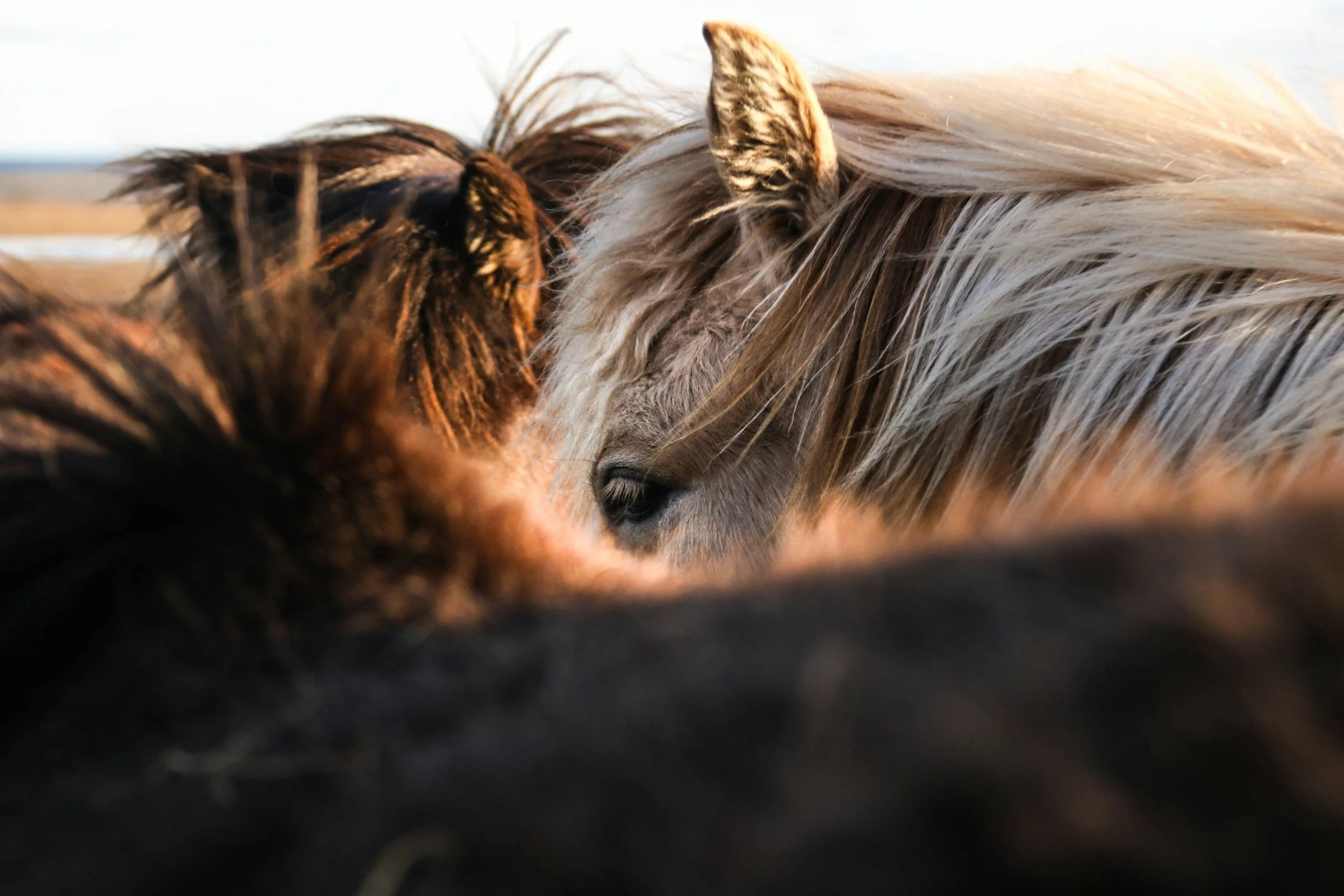
There is a photograph that does a lot of work in American conservation debates. You've seen a version of it: a band of horses running across an open landscape, manes flying, dust rising, the whole scene suffused with the particular light of the American West. Freedom. Wildness. Something irreplaceable.
That photograph is doing enormous cultural labor. It is also obscuring a fairly significant biological fact — which is that the horses in it are, technically, feral animals descended from domesticated stock, not wild animals in the taxonomic sense of the term. Their ancestors were brought to North America by Spanish conquistadors in the fifteenth century. There were no free-ranging horses on this continent for at least 10,000 years before that.
This distinction — feral versus wild — is not a semantic quibble. It is the load-bearing wall of one of the most expensive, ecologically damaging, and emotionally loaded wildlife management failures in the history of the American West. And understanding it requires being willing to ask a question that a surprising number of people find almost impossible to sit with: what do we actually owe an animal whose mythology is more durable than its ecological reality?
The Wild Horse and Burro Act: Well-Intentioned, Ecologically Catastrophic
In 1971, Congress passed the Wild Free-Roaming Horses and Burros Act — the legislation that gave federal protection to feral horses and burros on public lands. The Act was born of genuine moral concern: the animals were being captured and sold for slaughter, and the images generated public outrage. The protection seemed humane and straightforward.
It was neither, ecologically.
The Act made it illegal to harm or kill horses on federal land and required the Bureau of Land Management and USFS to maintain them in "thriving natural ecological balance." What the legislation failed to account for was that horses have no natural predators on the contemporary North American landscape, reproduce rapidly — doubling in population every four to five years — and have no ecological check on their population growth except starvation, water depletion, and the federal management that the Act simultaneously made extremely difficult to implement effectively.
As of March 2026, the BLM's range-wide count stands at approximately 73,130 horses and burros on public lands — the lowest number in eight years, and still nearly three times the national estimated sustainable threshold of 27,000. Wild horse and burro numbers exceed appropriate management levels in 86% of the herds across the West. The BLM currently holds an additional 62,000 animals in off-range pastures and facilities, and Congress allocated $144 million for wild horse and burro management in fiscal year 2026. Between March and October of this year, the agency plans to capture and remove 14,830 animals — the first full gather schedule released in fiscal year 2026, six months into the year. Roundups are already underway in Nevada. The management bureaucracy created by the Act has produced a situation where Congress's inability to authorize effective population control has generated both a massive animal welfare crisis — horses on degraded range slowly starving — and a massive ecological one. Even the agency's primary tool for placing captured animals has hit a wall: a federal court in 2026 ruled that BLM's $1,000 adoption incentive program violates federal law, finding that protections against adopted horses later being sold to slaughter are insufficient, putting the program on indefinite hold.
What Overabundant Horses Do to Western Rangelands
The ecological impact of overabundant feral horses is well-documented and ecologically serious, even if it is politically inconvenient to say so.
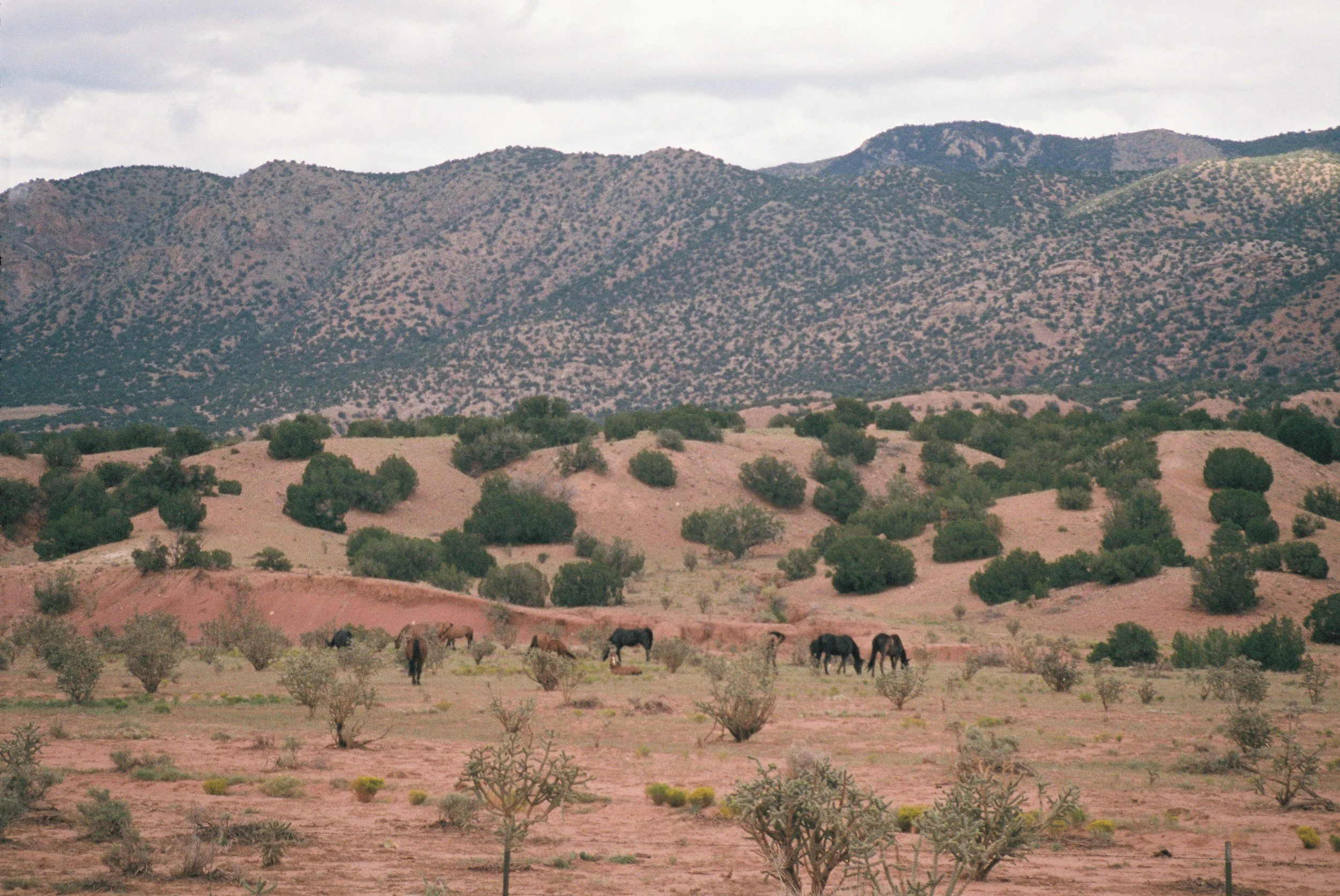
Horse-grazed areas show significantly lower density of herbaceous and sagebrush cover, reduced plant species diversity, and accelerated loss of the native high-forage-value plants that sagebrush-steppe ecosystems depend on (Davies et al., 2014, Rangeland Ecology and Management). Horses are continuous grazers — unlike cattle, which are removed seasonally, horses have year-round access to rangelands and particularly to riparian areas, where their trampling of streambanks causes erosion, water quality degradation, and temperature spikes that directly affect fish populations. The western riparian areas that horses concentrate around are among the most ecologically productive and most sensitive habitats in the region.
The broader community effects are significant. Greater sage-grouse — already in decline — lose critical habitat when horses overgraze the sagebrush. Native ungulates including pronghorn and elk are outcompeted for water and forage during drought conditions, with horses sometimes physically excluding them from limited water sources. The cheatgrass invasion, which has already transformed approximately 50 million acres of the American West into fire-prone annual grassland, accelerates in areas destabilized by horse overgrazing.
A rangeland ecologist quoted in National Geographic put it plainly: any population of unmanaged large herbivores in an area without predators can ultimately cause vegetation damage — whether it's deer, elk, cattle, sheep, horses, or bison. The species is not the point. The dynamics are the point. And the dynamics of feral horse populations on western public lands, under current management constraints, are trending toward ecological degradation.
The Human Dimensions: A Cultural Identity at War With Ecology
This is where the feral horse management story gets genuinely interesting from a human dimensions perspective — because the political obstacles to effective management are not primarily about ecology. They are about identity.
Mustangs carry a cultural weight in American mythology that is nearly unmatched among wildlife management subjects. They represent freedom, the frontier, Indigenous horsemanship, the romantic West, and a national self-image that has been consciously constructed and commercially cultivated for over a century. The horse's relationship to American identity — particularly western identity, Indigenous identity, and the self-image of people who have never been anywhere near a rangeland — is so deeply embedded that challenging feral horse management has the quality of challenging a national myth.
Research on wildlife value orientations is useful here in an unexpected way. Manfredo and Teel's work predicts that mutualist-oriented individuals — who see animals as individuals deserving of moral consideration — will resist lethal management regardless of ecological rationale (Teel & Manfredo, 2009, Human Dimensions of Wildlife). With feral horses, the mutualism orientation combines with a powerful cultural symbolism that amplifies opposition far beyond what the ecological facts alone would generate. Opposition to horse management doesn't just come from people who love individual horses. It comes from people who love what horses represent — and whose sense of the American West is directly implicated in how the horses are treated.
A 2021 paper in the Journal of Wildlife Management on science-based management of free-roaming equids noted that the human-dimensions aspects of feral horse management are "even less understood than ecological or biological issues" — which is remarkable given how thoroughly the ecological issues have been studied. We know what horses do to sagebrush. We know significantly less about how to talk to a public whose identity is entangled with the animal causing the damage.
The Wild Horse and Burro Act was itself a product of this cultural dynamic — passed by Congress in response to public sentiment that had been successfully organized around the romantic image of the mustang rather than any analysis of ecological carrying capacity. The Act has never been successfully amended to allow effective management, not because the ecological case is weak, but because the political opposition from horse protection groups — drawing on the same deep cultural reservoir — has consistently blocked it.
The most precise current illustration of this dynamic is in Colorado. In 2023, fed up with years of large-scale helicopter roundups, the state legislature created the Colorado Wild Horse Working Group — a 23-member stakeholder body, funded with $1.5 million in state money, charged with developing humane nonlethal alternatives. Three years of engagement, research, and genuine cross-stakeholder work produced a clear primary recommendation: expand PZP fertility control programs significantly. The 2026 BLM gather schedule includes approximately 200 PZP treatments in Colorado. It also includes three helicopter roundups, directly contradicting both the working group's recommendations and Governor Polis's formal requests that BLM stop using helicopters to capture horses in the state. The chair of the working group noted that despite earnest efforts to bring stakeholders to the table, the outcome looks nearly identical to 2022. The management decision and the values conversation are still happening in different rooms.
What "Wild" Actually Means Here
There is a philosophical question underneath the management debate that deserves naming directly: are feral horses wild animals?
The answer is genuinely complicated. Biologically, horses evolved in North America — the fossil record is unambiguous — and were part of this ecosystem for millions of years before going extinct approximately 10,000 years ago. The horses that returned with the Spanish were reintroducing a genus that had been here, not introducing something wholly foreign. Some researchers have argued this makes them "ecological replacements" for the Pleistocene horses that disappeared, playing a similar functional role in structuring grassland ecosystems.
Most ecologists find this argument unpersuasive, for a simple reason: 10,000 years is a very long time. The ecosystems that exist today evolved without horses for a hundred centuries. The plant communities, the predator-prey dynamics, the soil microbiology — none of it retained adaptations to equid grazing pressure during that absence. Reintroducing horses to these systems now is not ecological restoration. It is the introduction of a highly competitive, ecologically disruptive large herbivore into systems that did not develop with it.
But here's the part worth holding: "ecologically disruptive non-native species" and "culturally irreplaceable symbol of American freedom" are both true descriptions of the same animal. The ecological facts don't make the cultural meaning disappear. They just create a management situation of extraordinary complexity, in which the tools that would work ecologically — lethal population control — are politically radioactive, and the tools that are politically acceptable — roundups and long-term holding facilities — are financially unsustainable and arguably less humane.
What Honest Management Looks Like
The current system — in which the BLM removes horses from the range and warehouses them indefinitely at staggering public expense — is not a conservation strategy. It is a political accommodation that serves neither the horses nor the rangelands nor the taxpayer.
The most promising path forward combines aggressive fertility control using the PZP immunocontraceptive vaccine — which has demonstrated effectiveness in managed herds and is significantly more humane than roundups — with targeted removals in the most ecologically sensitive areas, and a genuine public conversation about carrying capacity that treats people as adults capable of holding complexity.
That public conversation requires something that has so far been largely absent: an honest acknowledgment that the mustang myth and the ecological reality are in conflict, and that loving horses — which is legitimate and real — does not automatically translate into policies that are good for the rangelands, the native wildlife, or ultimately the horses themselves dying on degraded range.
The animal most damaged by the failure to manage feral horse populations effectively is the feral horse.
Frequently Asked Questions About Feral Horses
Are mustangs native to North America? Genetically, horses evolved in North America but went extinct here approximately 10,000 years ago. The horses now on western rangelands are descended from domesticated animals brought by European colonizers beginning in the 15th century, making them feral rather than wild in the biological sense. Some researchers argue horses are "ecological replacements" for Pleistocene equids; most ecologists do not find this a sufficient basis for treating contemporary feral horses as native wildlife.
How many wild horses are there in the US? As of March 2026, approximately 73,130 horses and burros roam on public lands — the lowest count in eight years, and still nearly three times the estimated sustainable threshold of 27,000. An additional 62,000 are held in BLM off-range facilities. Congress allocated $144 million for the program in fiscal year 2026, and the BLM plans to remove 14,830 animals between March and October of this year. Horse numbers exceed appropriate management levels in 86% of western herds.
Why can't the government just euthanize excess horses? The Wild Free-Roaming Horses and Burros Act of 1971 prohibits killing horses on federal land and requires the BLM to maintain them at "thriving natural ecological balance." Congress has not authorized lethal population control, in large part due to intense cultural and political opposition from horse advocacy groups. The result is a system that removes horses from range but warehouses them indefinitely rather than managing population at the source. The agency's primary placement mechanism — a $1,000 adoption incentive program — was placed on indefinite hold in 2026 after a federal court ruled it violates federal law, finding that protections against adopted horses later being sold to slaughter are insufficient.
What is PZP contraception for horses? PZP (porcine zona pellucida) is an immunocontraceptive vaccine that prevents pregnancy in mares. It is considered significantly more humane than roundups and has demonstrated effectiveness in small managed herds. Scaling it to the full BLM management challenge is logistically complex but increasingly viewed by wildlife managers as a critical component of any sustainable management strategy.
References Cited
Loss, S.R., et al. (2013). The impact of free-ranging domestic cats on wildlife of the United States. Nature Communications, 4.
Davies, K.W., et al. (2014). Effects of feral free-roaming horses on semi-arid rangeland ecosystems. Rangeland Ecology & Management, 67(6).
Schoenecker, K.A., et al. (2021). The wildlife profession's duty in achieving science-based sustainable management of free-roaming equids. Journal of Wildlife Management, 85(6).
Teel, T.L., & Manfredo, M.J. (2009). Understanding the diversity of public interests in wildlife management. Human Dimensions of Wildlife, 14(6).
Manfredo, M.J., Teel, T.L., & Bruskotter, J.T. (2021). Bringing social values to wildlife conservation decisions. Frontiers in Ecology and the Environment, 19(6).
Somewhat Wild Life | Ethics & Field Notes is published biweekly. Conservation content that doesn't pretend. Written by Julianne — wildlife biologist, former zoo and aquarium staff, researcher, and person still working it out.
