What "Native" Actually Costs: Mountain Goats, Olympic National Park, and the Price of Ecological Honesty
On non-native species removal, the definition of native, the Olympic mountain goat management plan, and what conservation requires when the animal you're removing is beloved
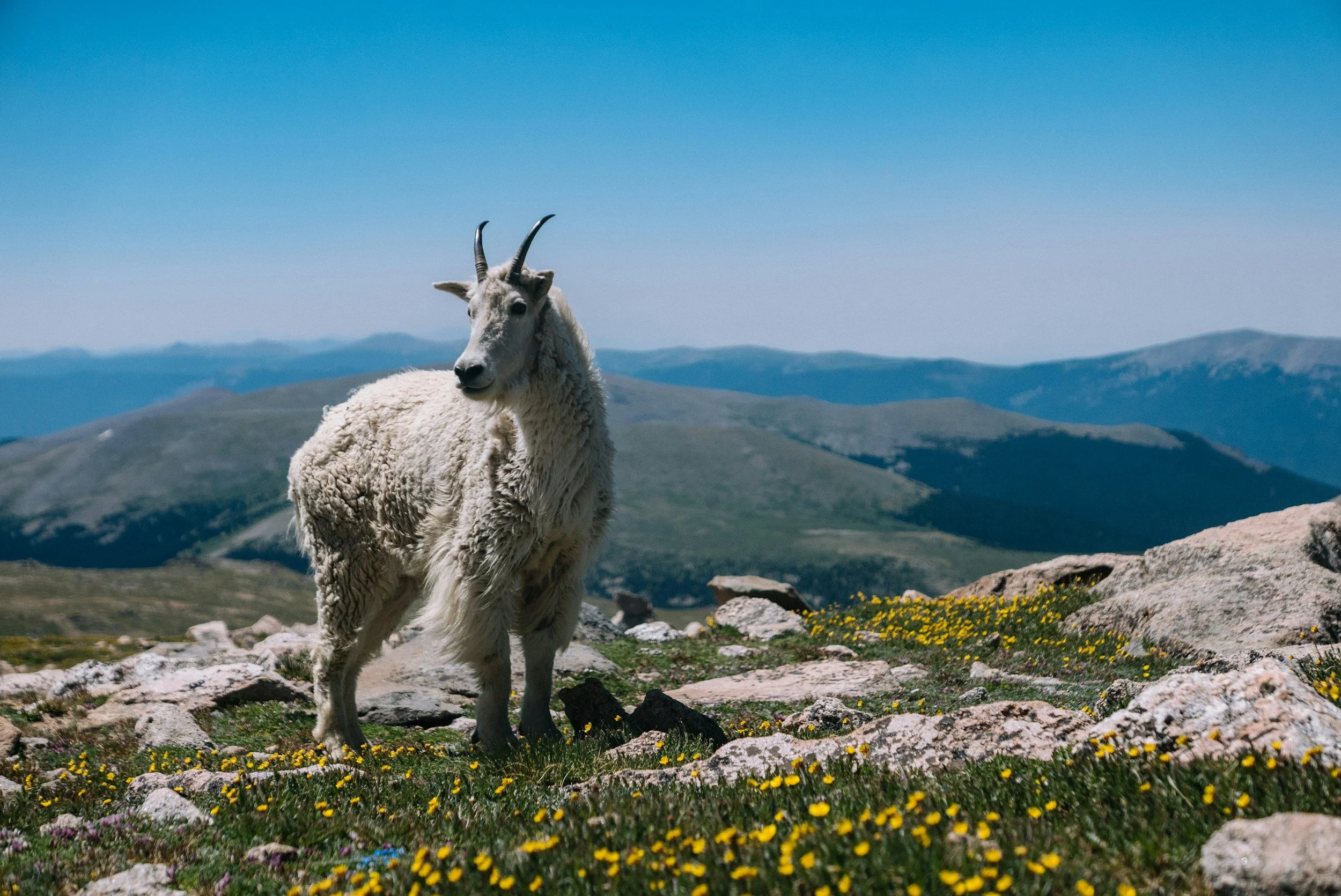
In the 1920s, a group of hunters introduced approximately twelve mountain goats to the Olympic Peninsula of Washington State. The goats were brought for sport hunting. They had no natural predators. The peninsula is a geographic island — surrounded by water, isolated from the mainland mountain ranges where goats are native — so they stayed, and they thrived, and their descendants multiplied for a century into a population of more than 700 animals distributed throughout some of the most ecologically fragile alpine terrain in the Pacific Northwest.
By 2018, the National Park Service had finalized a plan to remove all of them.
What followed was one of the most logistically complex, ecologically instructive, and publicly contentious wildlife management operations in recent national park history — a multi-year program combining helicopter capture and translocation, trained volunteer marksmen, and ultimately aerial lethal removal that drew over 1,200 applications from the public to participate in the ground-based shooting. The operation was, by most ecological measures, a success. It was also a case study in everything hard about conservation management when the animal you're removing is charismatic, present on the landscape for multiple human generations, and defended by people who love them with complete sincerity.
Why the Goats Had to Go: The Ecological Case
Mountain goats are native to the Cascade Range and other Pacific Northwest mountain systems — just not to the Olympic Peninsula, which evolved as an isolated mountain island with a distinct assemblage of plant species found nowhere else on Earth.
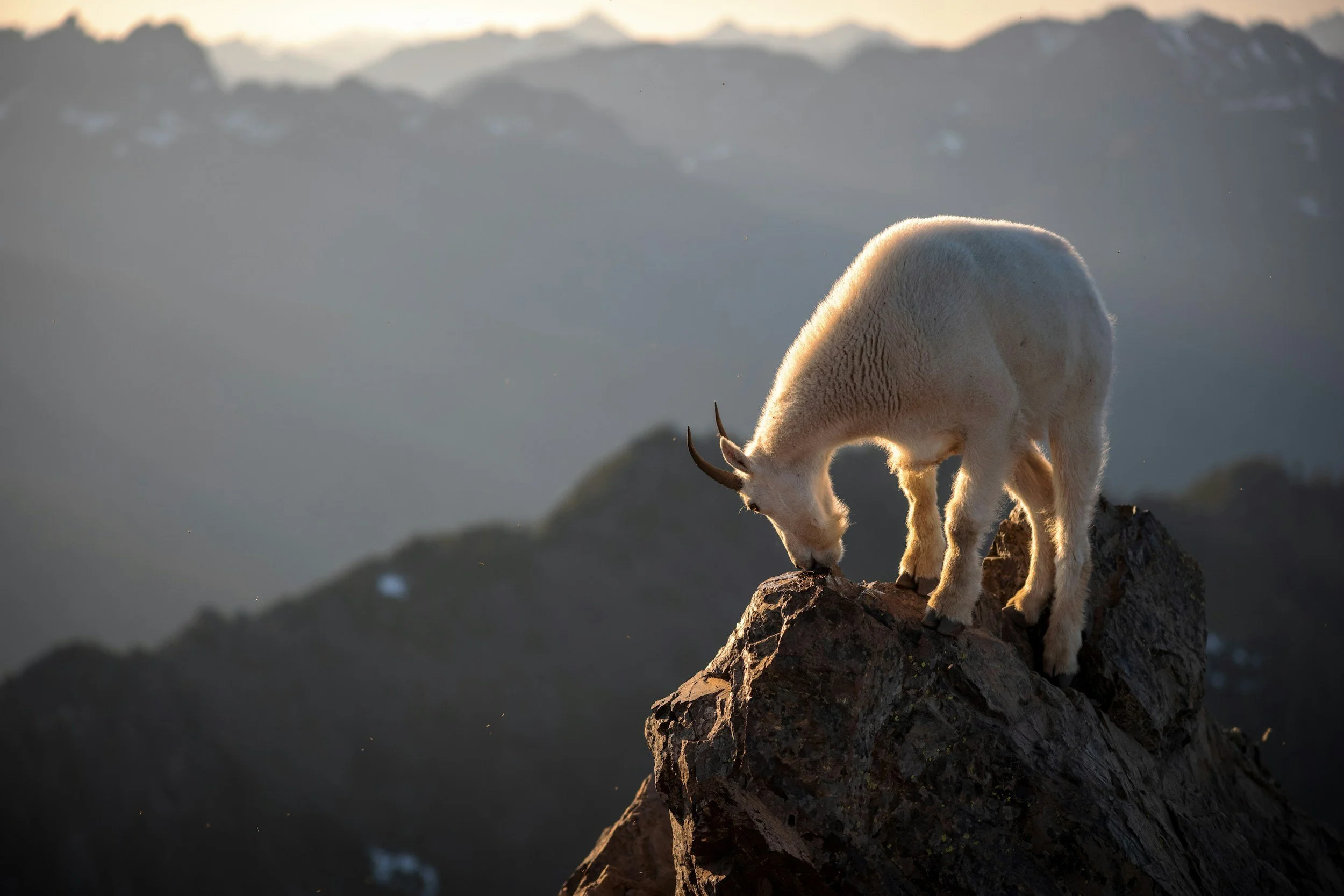
That distinctiveness is the ecological heart of the matter. Olympic National Park contains numerous endemic plant species — plants that evolved only on the Olympic Peninsula and exist nowhere else in the world. These plants evolved without the grazing, wallowing, and trampling pressure of mountain ungulates. They have no evolved defenses against the kind of intensive use that mountain goats impose. Over a century, the goat population had caused documented and significant damage to alpine vegetation communities, with some endemic species declining to the point of conservation concern.
The goats also had a specific human interaction problem that is, depending on your perspective, either ecologically irrelevant or usefully illustrative of the broader issue: they were addicted to human urine. Because the Olympic Peninsula lacks the natural mineral salt licks common in mainland mountain ranges, goats had learned over generations to seek salt from human hikers — specifically from urine deposits near campsites and trail systems. The behavioral habituation had produced goats that would aggressively approach and harass hikers in search of salt, and in 2010 a hiker was fatally gored by a mountain goat in Olympic National Park.
The management case against the goats was therefore both ecological and public safety-based. The ecological case was arguably stronger — a century of non-native ungulate grazing had reshaped alpine communities that took far longer than a century to develop.
The Management Plan: What "Removal" Actually Required
The 2018 Mountain Goat Management Plan, finalized after an extensive public review process that began in 2014, chose Alternative D: a combination of capture and translocation to the North Cascades, where mountain goats are native but depleted, followed by lethal removal of animals that could not be safely captured.
The translocation piece was a genuine conservation win-win — removing animals from a system where they don't belong while simultaneously bolstering a population where they do. Between 2018 and 2020, four two-week helicopter capture operations relocated 325 goats to the North Cascades. Ninety percent survived the first 50 days. Nannies began breeding with Cascade goats, improving genetic diversity in the recipient population. By any measure, the translocation succeeded beyond expectations.
But translocation has limits. As the operation progressed, the remaining goats became increasingly difficult to capture safely — retreating to more remote terrain, becoming more wary of the helicopters. Capture mortality increased and efficiency declined. By August 2020, the NPS determined that the capture phase was complete and lethal removal would begin.
The public response to the lethal removal phase was instructive. Over 1,200 groups applied to participate in the ground-based volunteer shooting program — a number that surprised park managers and required an extensive vetting and selection process. The application volume reflected both the genuine public investment in the conservation mission and the more complicated reality that many applicants were hunters who had spent years watching an unhuntable mountain goat population accumulate in Olympic National Park while tags in native mountain states remained scarce. The goat removal program represented, for many applicants, a rare opportunity to engage in a form of conservation that also happened to align with their own recreational interests.
By the end of the ground phase, 31 goats had been removed. Aerial operations continued in 2021 and 2022. The total number of goats remaining in the park is now estimated at 200 to 400 — significantly reduced from the 725 at the program's start, though full removal was never expected to occur through volunteer ground operations alone.
The Definition of "Native": A Load-Bearing Concept in Conservation
The Olympic mountain goat management plan rests on a foundational conservation concept that seems straightforward until you pull on it: nativeness. The goats are being removed because they are not native. But what does "native" actually mean, and how much conservation work does it do?
In conventional conservation biology, native status refers to whether a species was present in a given area prior to significant human modification of the ecosystem — typically benchmarked at European contact in North America. Mountain goats were present in the Cascades and other Pacific Northwest ranges before European contact. They were not present on the Olympic Peninsula. Therefore: non-native, remove.
This framework has produced genuinely important conservation outcomes — island eradications of introduced predators have allowed seabird populations to recover dramatically, and the removal of introduced ungulates from Galápagos islands restored endemic vegetation communities that had been degraded for generations. The framework works, in many cases, because the ecological disruption caused by introduced species is real and the direction of effect is clear.
But critics of strict nativeness-based conservation have raised legitimate questions. A 2019 paper on "the policy consequences of defining rewilding" in PMC noted that nativeness frameworks can be used to legitimize the exclusion of species that have been part of a landscape for multiple human generations — and that the line between "introduced" and "resident" gets blurry when you're talking about a century of established presence. The Olympic goats were introduced in the 1920s. They predate the National Park's establishment in 1938. They have been part of the high alpine landscape, in some form, for longer than many of the people debating their removal have been alive.
This doesn't mean the removal was wrong. The endemic plant species threatened by goat grazing are genuinely irreplaceable, and the island geography of the Olympic Peninsula means there is no equilibrium point at which goats and native plants can coexist indefinitely. The ecological argument for removal is sound.
It does mean that "non-native, remove" is a starting point for a conservation decision, not an ending one. The hard questions — at what cost? over what timeline? at what rate of capture mortality? using what methods and what community engagement? — are not answered by the nativeness determination. They require exactly the kind of human dimensions analysis, stakeholder engagement, and honest public communication that the Olympic management plan, to its credit, largely attempted.
The Human Dimensions: Who Owns a Goat Nobody Brought?
The public response to the Olympic mountain goat removal is a case study in the complexity of conservation values at the community level.
The people who opposed the removal were not uninformed or indifferent to ecology. They were, in many cases, people who had hiked Olympic's high country for decades and had a personal relationship to the goats they'd encountered there. Their opposition reflected a genuinely held position: that an animal which has lived in a place for a century, which has been woven into the experience of that place for multiple generations of visitors, has acquired a form of belonging that pure ecological classification doesn't fully capture.
This position is philosophically coherent even if it is ecologically problematic. It reflects the same mutualist value orientation — the view of individual animals as members of a moral community — that shapes responses to deer culling, urban predator removal, and almost every other lethal management decision in this series. The difference is that in the Olympic case, the management decision is grounded in an unusually strong ecological argument, was preceded by over a decade of public process, prioritized translocation over lethal removal wherever possible, and used volunteers from the public for the ground-based lethal operations. By the standards of conservation communication, this program did most things right.
The response was still contentious. Because the question of whether an introduced animal that has lived in a place for a century belongs there is not a question that ecological classification fully resolves. It is a question about the moral weight we assign to presence, to time, to individual animal lives, and to the competing claims of endemic species that cannot speak for themselves.
Research on wildlife management communication has consistently found that transparency about tradeoffs — naming clearly what is being lost as well as what is being gained — produces better long-term public trust than framing that emphasizes only the conservation benefits (Smith et al., 2024, Journal of Wildlife Management). The Olympic program's honest acknowledgment that 22 goats died during translocation operations, that lethal removal would be necessary, that the process would be imperfect, was the right communication approach. It did not eliminate opposition. It did prevent the kind of festering distrust that comes from management decisions that feel like they were made behind closed doors.
What This Case Teaches
The Olympic mountain goat story is the most instructive case in this series's first arc — not because it represents the hardest management challenge, but because it got so much right and was still contentious.
It demonstrates that ecological soundness, extensive public process, transparent communication, genuine conservation benefit, and a preference for non-lethal methods where possible are necessary but not sufficient conditions for public acceptance of hard management decisions. Some portion of the public will oppose lethal removal of any charismatic mammal, for any reason, under any circumstances. That is a fixed political reality that conservation managers have to work within rather than around.
What it also demonstrates is that the nature question — what belongs here? — is worth asking carefully rather than answering reflexively. Not every non-native species removal is equally urgent, equally feasible, or equally justified. The Olympic case was unusually clear: isolated geography, endemic plants found nowhere else, a century of documented ecological damage, a viable receiving population for the translocated animals. Many non-native species removal decisions are significantly less clear-cut.
The value of nativeness as a conservation concept is real. The danger of treating it as self-executing — remove the non-native, problem solved — is that it sidesteps the harder questions about cost, method, community, and what we owe the individual animals whose presence on a landscape is the direct result of human decisions made a century ago.
Those animals didn't bring themselves here. That matters, even if it doesn't change the ecological conclusion.
Frequently Asked Questions About Mountain Goats at Olympic National Park
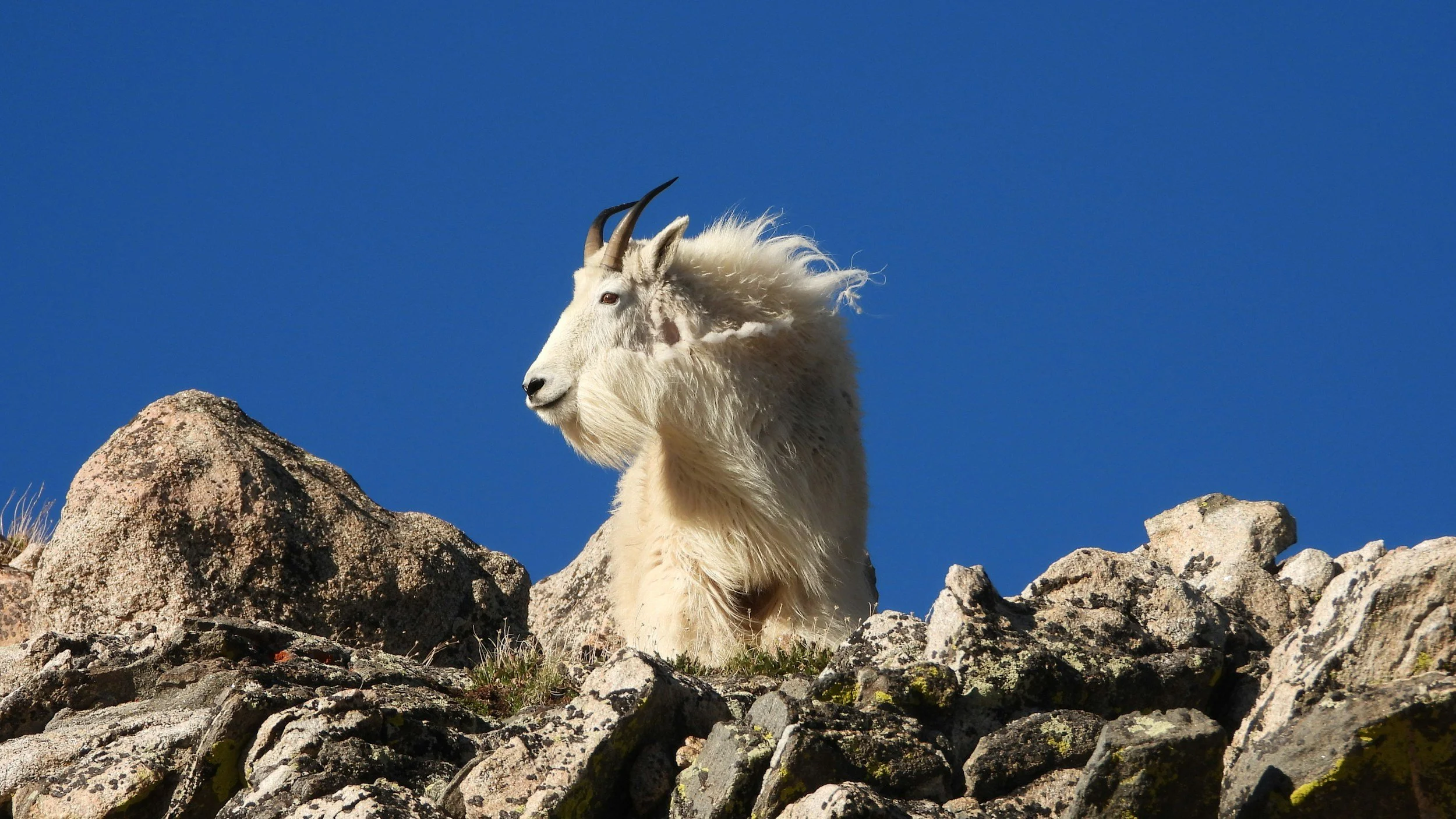
Why were mountain goats removed from Olympic National Park? Mountain goats were introduced to the Olympic Peninsula in the 1920s for sport hunting. As a non-native species on an ecologically isolated mountain island, they caused significant damage to endemic alpine plant communities over a century of grazing, trampling, and wallowing. They also became habituated to humans in search of salt, leading to aggressive encounters including a fatal goring in 2010. The 2018 management plan called for full removal through translocation and lethal management.
What happened to the Olympic mountain goats? Between 2018 and 2020, 325 goats were captured by helicopter and translocated to the North Cascades, where mountain goats are native but declining. An additional 31 were removed by trained volunteers in a ground-based lethal program in fall 2020, and aerial lethal operations continued in 2021-2022. The total population has been significantly reduced from an estimated 725 in 2018 to an estimated 200-400.
Were the translocated goats successful in the North Cascades? Yes. Ninety percent of translocated goats survived the first 50 days. Nannies began breeding with native Cascade goats, improving genetic diversity in the recipient population. The translocation component is considered a significant conservation success for both Olympic and Cascade ecosystems.
Why couldn't the mountain goats just stay in Olympic National Park? The Olympic Peninsula is an ecological island — isolated from other mountain systems by water — with no natural check on goat population growth and numerous endemic plant species that evolved without ungulate grazing pressure. Unlike systems with more ecological flexibility, there is no equilibrium point at which the goat population and the endemic vegetation could coexist long-term. Full removal was the only ecologically defensible option.
Are mountain goats native to Washington State? Yes, to the Cascade Range and other mainland mountain systems, where they are a native species. They are not native to the Olympic Peninsula, which is geographically isolated and evolved a distinct plant community without mountain goats. The translocation program specifically targeted Cascade areas where native goat populations had been depleted by historical hunting.
References Cited
National Park Service. (2018). Final Mountain Goat Management Plan/Environmental Impact Statement, Olympic National Park.
Smith, J.A., et al. (2024). A practical framework for ethics assessment in wildlife management decision-making. Journal of Wildlife Management.
Manfredo, M.J., Teel, T.L., & Bruskotter, J.T. (2021). Bringing social values to wildlife conservation decisions. Frontiers in Ecology and the Environment, 19(6).
Castillo-Huitrón, N.M., et al. (2020). The importance of human emotions for wildlife conservation. Frontiers in Psychology, 11.
Jørgensen, D. (2015). Rethinking rewilding. Geoforum, 65.
Next issue: Why Loving Nature Isn't Enough — on the gap between caring about wildlife and actually doing something useful about it, and what that unfinished masters thesis has to say about all of us.
