The One That Splits the Room: Feral Cats, Conservation Science, and the Community We Can't Agree On
On feral cat impacts on wildlife, TNR programs, and why this debate fractures the people who care most
Here is the conservation conflict that will reliably end friendships, derail Audubon chapter meetings, and generate more heated comment sections than almost any other topic in this newsletter's first year:
Your neighbor's cat.
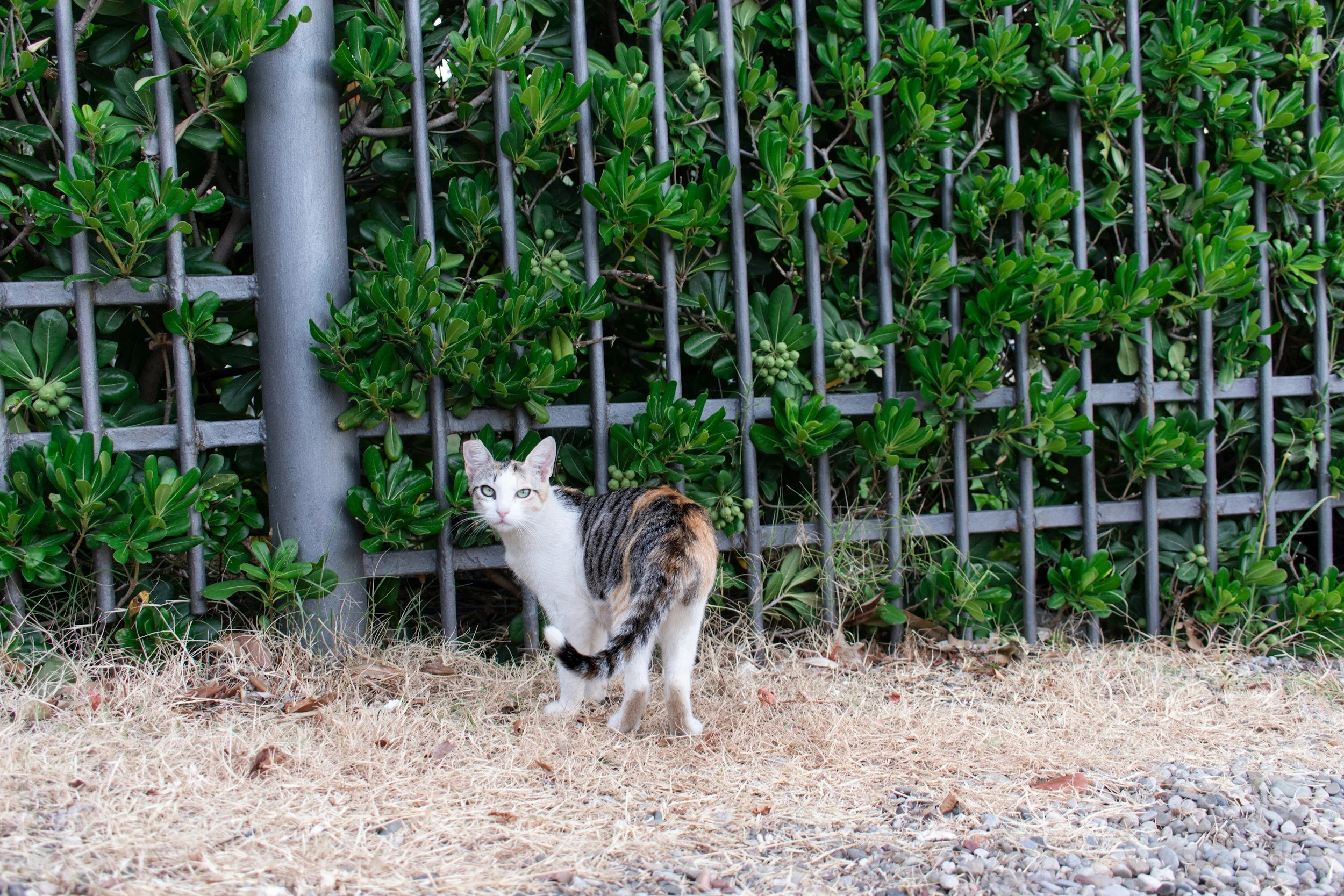
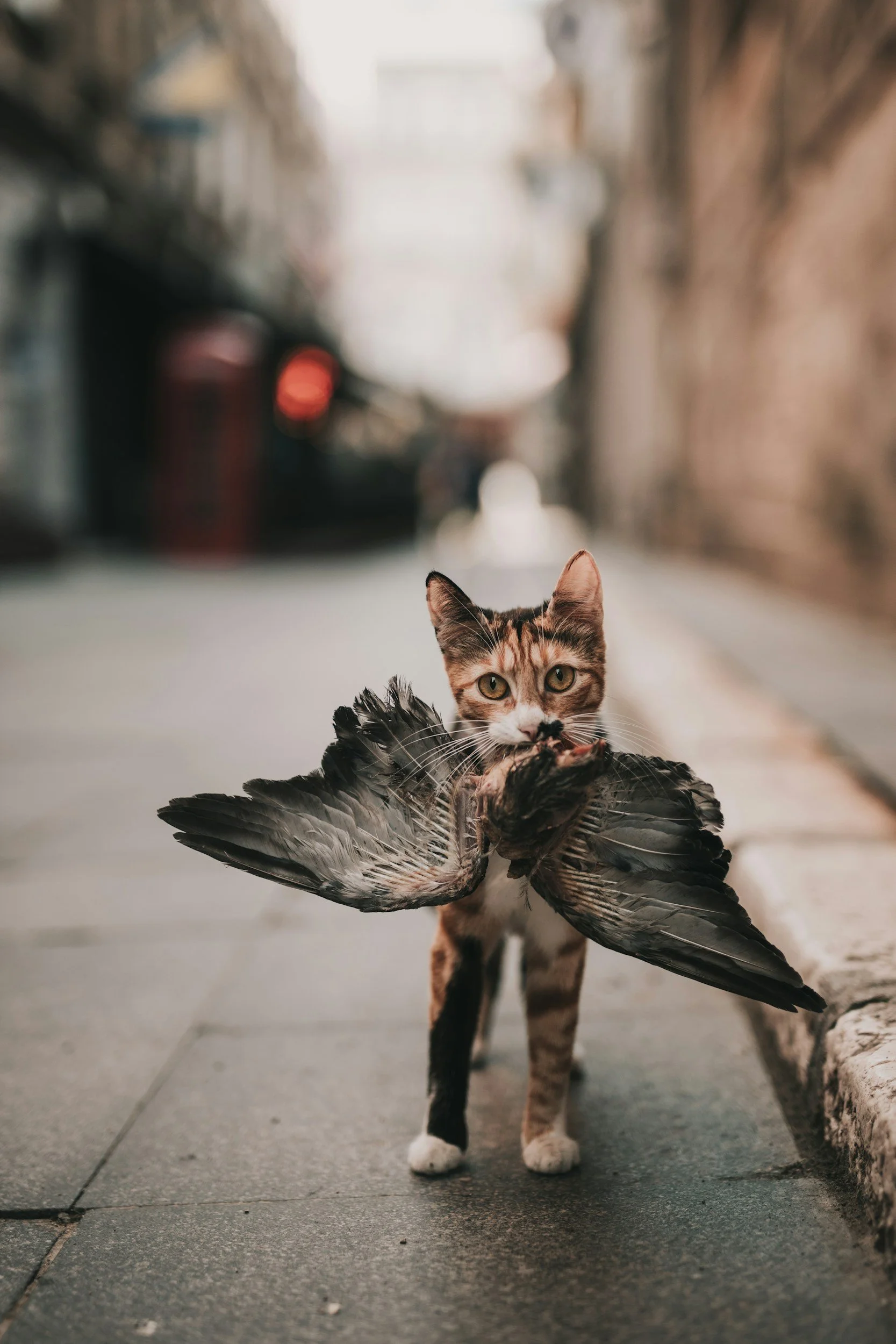
More specifically: the 30 to 80 million unowned, free-roaming cats estimated to live in the United States. The ones living in managed colonies behind strip malls and in city parks and along the edges of nature preserves. The ones being trapped, neutered, and returned to the landscape by well-meaning volunteers who love animals and are doing their absolute best. The ones that, according to a landmark study from the Smithsonian Conservation Biology Institute and the U.S. Fish and Wildlife Service, kill between 1.3 and 4 billion birds and 6.3 to 22.3 billion mammals in the United States every year (Loss et al., 2013, Nature Communications).
That last number tends to generate a specific reaction in conservation circles. It generates a different specific reaction in cat welfare circles. And the two reactions have been doing battle in comment sections, city council chambers, and peer-reviewed journals for decades now — with no resolution in sight, and significant ecological consequences accumulating in the meantime.
I have been on field surveys. I have found cat-killed birds. I have also loved cats my entire life. I am telling you honestly that this essay was hard to write.
What Feral Cats Actually Do to Wildlife
The ecological case against free-roaming cats is not subtle and it is not contested among mainstream conservation biologists.
Domestic cats are among the IUCN's 100 of the World's Worst Invasive Alien Species. Globally, they have contributed to the extinction of at least 63 species and are responsible for at least 14% of bird, mammal, and reptile extinctions on islands (Doherty et al., 2016, Global Change Biology). The island evidence is particularly damning — multiple studies have documented native seabird and shorebird populations recovering significantly following cat eradication programs.
On the mainland, the picture is more contested but still troubling. The Loss et al. (2013) figures — the 1.3-4 billion birds annually — have been challenged on methodological grounds, and the debate has been heated enough that a 2018 paper in Biological Invasions specifically addressed what its authors called a "misinformation campaign" by feral cat advocacy groups to discredit the original research. The specific numbers may be uncertain. The direction of the effect is not. Several studies have found that bird populations in areas with high cat densities function as population sinks — meaning the mortality rate is so high that populations can only persist through immigration from cat-free areas (Baker et al., 2008; Balogh et al., 2011). The predation isn't just additive. It is structurally damaging.
Beyond predation, free-roaming cats carry Toxoplasma gondii — a parasite that has been linked to the deaths of endangered Hawaiian monk seals, is the second leading cause of death in humans from foodborne illness in the US, and causes behavioral changes in a wide range of wildlife species that make them more vulnerable to predation (VanWormer et al., 2013). They serve as disease reservoirs for rabies, bartonellosis, and salmonellosis. The Wildlife Society's position is unambiguous: free-ranging domestic cats are an invasive species with demonstrated harmful impacts on native wildlife and human health.
The TNR Debate: Where the Conservation Community Fractures Itself
Trap-Neuter-Return — the practice of trapping feral cats, sterilizing them, and returning them to their outdoor colonies — is where the fracture lines within the conservation community become impossible to ignore.
The TNR debate is not really about cats. It is about what we owe individual animals versus what we owe species and ecosystems, about who counts in our moral circle and how we weigh competing harms. It is one of the most philosophically rich and practically unresolved conflicts in contemporary conservation ethics — and understanding it requires sitting with the fact that genuinely good people, with genuinely caring motivations, have landed on diametrically opposite positions.
The conservation case against TNR is rooted in ecology: studies consistently show that TNR does not meaningfully reduce feral cat populations at landscape scale. To achieve even modest population reduction through TNR, you would need to sterilize at least 70% of cats in a colony — and maintain that coverage over time while new animals continuously move into the territory. The Animal Humane Society in Minnesota estimated that achieving this in the Twin Cities would require over 200,000 TNR surgeries per year; they have performed roughly 6,000 in a decade. Meanwhile, the cats already in colonies continue to hunt. A 2022 paper in Conservation Science and Practice called for stronger conservation leadership specifically in countering TNR programs expanding into wildlife-sensitive areas — noting that TNR addresses individual cat welfare using a single-species ethical lens that ignores the collateral suffering of the birds and mammals being killed.
The animal welfare case for TNR is rooted in a different set of values. TNR advocates correctly point out that the alternative — mass lethal removal — is both practically unfeasible at scale and politically impossible in most communities. Feral cats are not socialized and cannot be adopted. Euthanasia of healthy animals generates intense public opposition. The vacuum effect is real: remove a colony and new cats move in. Some long-term TNR programs have documented genuine population declines — a University of Florida campus program saw a 66% reduction over 11 years with no new kittens born after year four. The Animal Humane Society is honest that TNR's primary goal is not population reduction but reduction in euthanasia and improvement in individual cat welfare — and by that measure it succeeds.
The Human Dimensions: Why This One Hits Differently
Research on wildlife value orientations explains why the feral cat debate generates a particular intensity that other wildlife management conflicts don't quite match.
Most conservation conflicts pit nature lovers against economic interests — loggers, ranchers, developers. The feral cat conflict pits nature lovers against other nature lovers. It pits people who express their care for animals through cat colony stewardship against people who express their care for animals through bird conservation. Both groups hold strong mutualist wildlife value orientations — they view animals as individuals deserving of moral consideration and relationship. They simply disagree, profoundly, about which individuals count most (Manfredo et al., 2021, Frontiers in Ecology and the Environment).
A 2019 paper in Conservation Biology by Lynn et al. described the conflict as a "moral panic over cats" — arguing that conservation communication around feral cats has been disproportionate and counterproductive, generating defensiveness and entrenchment rather than behavior change. Loss and Marra responded with a rebuttal describing the same paper as part of a broader pattern of misinformation designed to undermine science-based management. Both papers were peer-reviewed. Both represent genuine scientific disagreement about how to communicate difficult ecological realities to a public that loves cats.
The Manfredo research on urbanization and mutualist values is directly relevant here: the communities most likely to sustain large feral cat populations — urban and suburban areas — are precisely the communities where mutualist values are most concentrated. Where people are most likely to feel visceral moral opposition to lethal management of any individual animal, regardless of ecological impact. And where TNR advocacy groups have their strongest political support, most sophisticated communications operations, and most effective lobbying presence.
Understanding this is not an excuse to abandon science-based management. It is a prerequisite for doing it effectively. A management strategy that generates intense organized opposition from a large, motivated, politically connected constituency — even if it is ecologically correct — will fail in implementation. The question for conservation communication is not just what the right answer is, but how to move a divided community toward it.
The Indoor Cat Question: Where Conservation and Animal Welfare Pull Apart
Before arriving at where I land on all of this, I want to address something the conservation community tends to handle poorly — because handling it poorly is part of why the conversation stays stuck.
Some conservationists argue the solution to outdoor cat predation is categorical: all domestic cats belong indoors. Keep them inside and the problem goes away. The American Bird Conservancy's Cats Indoors campaign makes this case explicitly. The conservation rationale is coherent. If outdoor cats are the primary vector for billions of bird deaths annually, removing cats from the outdoor environment addresses the source directly.
I am a cat owner. I am also a scientist. And I find I cannot fully endorse this position — not because the conservation concern isn't legitimate, but because it collides directly with another body of research I take equally seriously.
The evidence that outdoor access and time in natural environments meaningfully improves physical and psychological wellbeing in humans is substantial and growing. It is why pediatricians recommend outdoor play, why the concept of nature deficit disorder entered the clinical conversation, why urban green space is increasingly treated as a public health issue. Contact with living systems does something that indoor environments cannot replicate. That finding shapes how I understand what animals with evolutionary histories outdoors might need to thrive.
A cat is not a wild animal. But it is not far from one. It carries predatory instincts, sensory architecture, and behavioral repertoires developed across millennia of outdoor life. Research on indoor cat welfare shows that full confinement carries real costs for many individual animals — elevated stress indicators, higher rates of obesity and associated illness, stereotypic behavior, and what behaviorists describe as chronic understimulation (Strickler & Shull, 2014, Journal of Veterinary Behavior; Amat et al., 2009, Journal of Veterinary Behavior). Not every cat. But enough cats, consistently enough across studies, that dismissing indoor welfare as a minor concern requires ignoring the evidence.
So here is the tension that does not resolve cleanly: the conservation argument for keeping cats indoors is scientifically grounded. The animal welfare argument for giving cats meaningful access to outdoor environments is also scientifically grounded. Declaring one categorically more important than the other and closing the conversation is not intellectually honest — and it is not, in practice, persuasive to the people whose behavior most needs to change.
What the categorical framing misses is that the actual question is not indoor versus outdoor. It is how to design ownership practices that reduce predation pressure without treating individual cat welfare as expendable in the accounting. Catio enclosures. Leash training. Predation-reducing collars. Keeping cats indoors during the dawn and dusk hours when avian predation risk peaks. Supervised outdoor access rather than unsupervised roaming. These are partial solutions. They hold the tension honestly rather than resolving it by simply overriding one set of legitimate interests with another.
The conservation community loses credibility with cat owners — the very people whose decisions shape outdoor cat populations — when it treats domestic cats as a problem to be managed rather than as animals whose welfare belongs in the same conversation as the birds. Not because cats and birds are equivalent. Because the person being asked to change their behavior has a relationship with their cat that deserves to be acknowledged rather than dismissed.
I am not softening the ecological argument. I am asking that the conversation be large enough to hold the cats too.
What We're Actually Asking
The honest version of the feral cat management conversation requires naming something that conservation organizations have generally been reluctant to name publicly: the most ecologically effective solution for free-roaming cats in wildlife-sensitive areas is lethal removal. Not TNR. Not relocation. Not contraception, which has no approved applications for cats at population scale. Removal.
That is a genuinely hard thing to say to a community that loves animals. It is also what the research supports.
What it does not mean is that every feral cat everywhere needs to be killed. Context matters enormously. A colony well away from sensitive wildlife habitat, under active management by engaged caretakers who are not abandoning new animals into it — that is a different situation than a colony on the edge of a shorebird nesting site or in a nature preserve with ground-nesting birds.
A 2022 call for renewed conservation leadership on TNR argued for a species-inclusive animal welfare framework — one that weighs the welfare of the cats alongside the welfare of the billions of birds and mammals they kill annually. That framing doesn't make the conversation easier. It makes it more honest.
The people who care for feral cat colonies are not villains. They are mutualist-oriented animal lovers doing what their values tell them to do for individual animals they have come to know and care for. The problem is that the system they're embedded in — the one that produces and abandons cats at scale — is not something individual colony caretakers created or can solve. The feral cat crisis is a human-created problem requiring human-scale solutions: mandatory spay-neuter programs, microchipping, restrictions on outdoor access for owned cats, and honest public conversation about what happens at the population level when individual animal welfare is the only lens we use.
That conversation requires both sides of this debate to sit in the same room and hold complexity. Which is, not coincidentally, exactly what this newsletter was built for.
Frequently Asked Questions About Feral Cats and Wildlife
How many birds do feral cats kill per year? A 2013 study from the Smithsonian Conservation Biology Institute and USFWS estimated that free-roaming cats kill between 1.3 and 4 billion birds and 6.3 to 22.3 billion mammals annually in the United States. Unowned cats cause approximately two-thirds of bird kills and 90% of small mammal kills. These estimates have been contested on methodological grounds but the direction of effect — significant population-level impacts on native wildlife — is supported by multiple independent studies.
Does TNR actually work to reduce feral cat populations? It depends on what you mean by "work." TNR does not meaningfully reduce feral cat populations at landscape scale — achieving even modest reduction requires sterilizing and maintaining coverage of at least 70% of cats, which exceeds the capacity of virtually all real-world programs. TNR does stabilize individual colonies, reduce cat euthanasia rates, and improve individual animal welfare. Conservation biologists generally oppose TNR in wildlife-sensitive areas; animal welfare organizations support it as a humane alternative to lethal management.
Are feral cats an invasive species? Yes, by the standard definition used by conservation biologists: domestic cats (Felis catus) are a non-native species introduced by humans with demonstrated harmful impacts on native wildlife. They are listed among the IUCN's 100 of the World's Worst Invasive Alien Species and have contributed to at least 63 species extinctions globally.
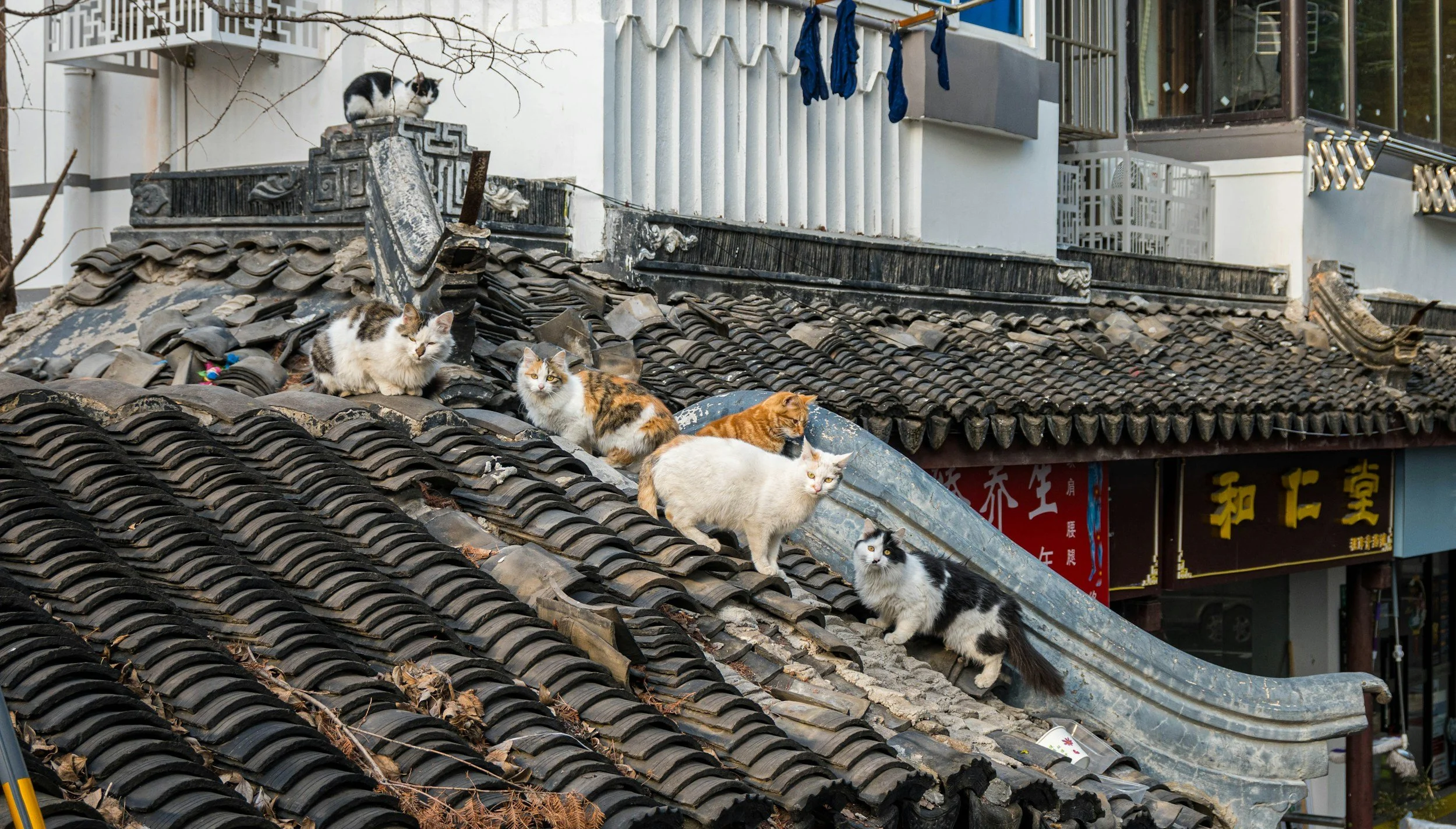
Why is the feral cat debate so contentious? Because it pits two groups of animal lovers — bird conservationists and cat welfare advocates — against each other using the same underlying values. Both groups hold mutualist wildlife value orientations and care deeply about animals. They disagree about which animals count most and how to weigh competing harms. The conflict is further complicated by the significant political influence of cat advocacy organizations, the genuine logistical challenges of lethal management at scale, and the emotional complexity of asking people who love individual cats to support their removal for ecosystem-level reasons.
References Cited
Loss, S.R., Will, T., & Marra, P.P. (2013). The impact of free-ranging domestic cats on wildlife of the United States. Nature Communications, 4.
Doherty, T.S., et al. (2016). Invasive predators and global biodiversity loss. PNAS, 113(40).
Lynn, W.S., et al. (2019). A moral panic over cats. Conservation Biology, 33(4).
Debrot, A.O., et al. (2022). A renewed call for conservation leadership 10 years further in the feral cat TNR debate. Conservation Science and Practice.
Manfredo, M.J., Teel, T.L., & Bruskotter, J.T. (2021). Bringing social values to wildlife conservation decisions. Frontiers in Ecology and the Environment, 19(6).
VanWormer, E., et al. (2013). Toxoplasma gondii, source to sea. EcoHealth, 10(3).
Strickler, B.L., & Shull, E.A. (2014). An owner survey of toys, activities, and behavior problems in indoor cats. Journal of Veterinary Behavior, 9(5).
Amat, M., et al. (2009). Potential precipitating factors and associated treatments in 85 cats with behavior problems. Journal of Veterinary Behavior, 4(4).
Somewhat Wild Life | Ethics & Field Notes is published biweekly. Conservation content that doesn't pretend. Written by Julianne — wildlife biologist, former zoo and aquarium staff, researcher, and person still working it out.
