The owl and the chainsaw — and the Gun: Spotted Owls, Old Growth, and the Conservation Problem That Refuses to Stay Solved
On the northern spotted owl, the barred owl management strategy, the timber wars, and what thirty years of conservation work taught us about consequences
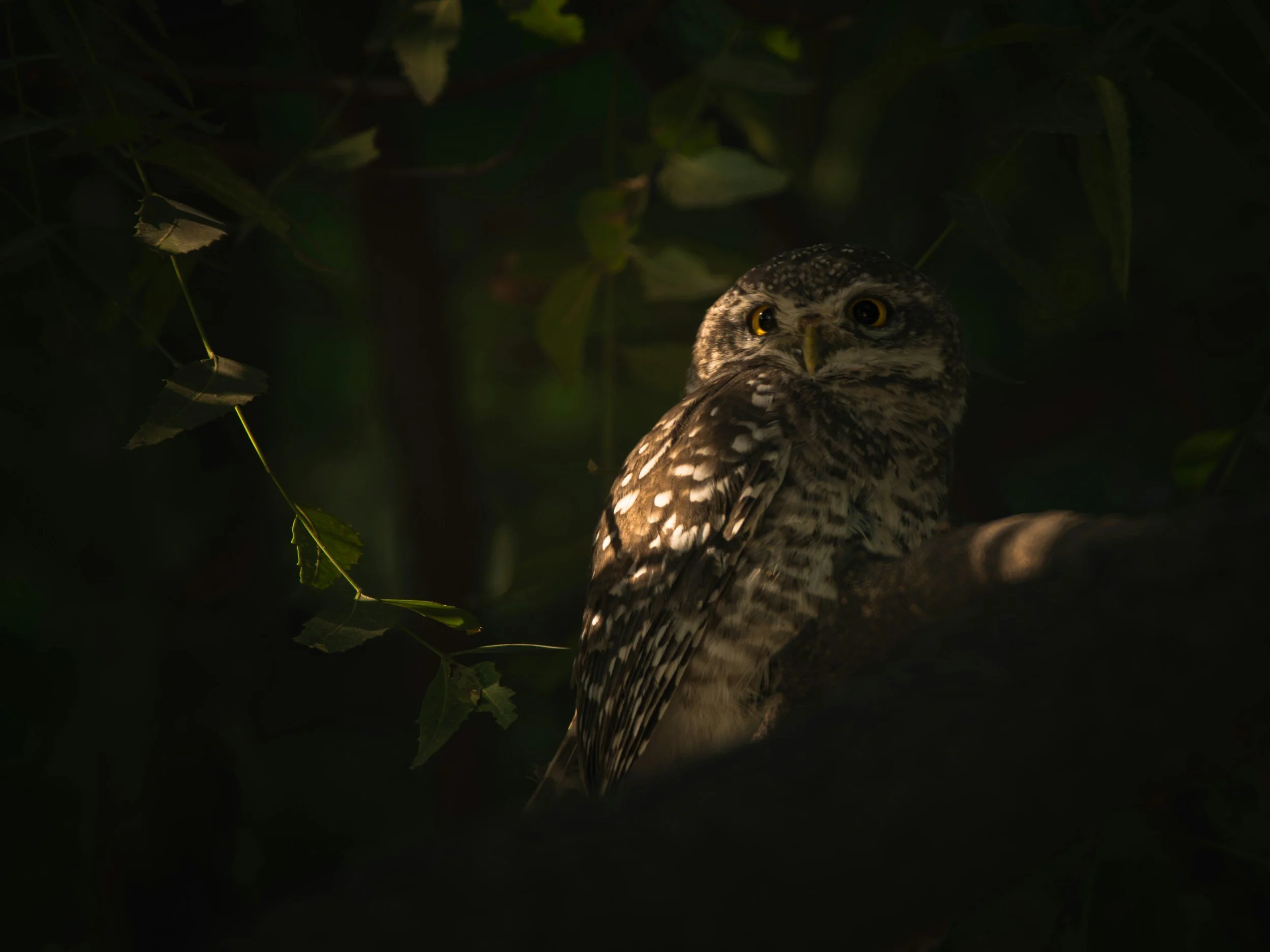
spotted owl
If you grew up in the Pacific Northwest in the 1980s and 1990s, you know the bumper sticker.
Kill a Spotted Owl — Save a Logger.
In mill towns across Oregon and Washington, plastic spotted owls were hung in effigy. Cafes served "spotted owl soup." A schoolteacher in one logging community told a reporter that her students drew pictures of owls getting shot. The owl became, depending on who you asked, either the symbol of everything wrong with environmentalists who cared more about birds than about working families, or the last line of defense for ancient forests being dismantled at a pace that, within a generation, would leave almost nothing.
The timber wars were ugly, and they left marks on communities that haven't fully healed thirty years later.
But here's what makes the northern spotted owl story genuinely fascinating as a conservation case study — it didn't end with the ESA listing, or the logging restrictions, or the Northwest Forest Plan. It didn't end at all. It just kept getting harder.
The owl is still declining. And the proposed solution — the 2024 Barred Owl Management Strategy — has managed to fracture not the timber industry versus environmentalists, but environmentalists versus each other. Which, if you've spent any time in conservation, you know is an impressive and deeply exhausting achievement.
The Northern Spotted Owl, Old-Growth Forests, and the ESA Listing
The northern spotted owl is a medium-sized bird that lives almost exclusively in old-growth forests — the ancient stands of Douglas fir, cedar, hemlock, and spruce that once blanketed the Pacific Northwest. These forests, some 200 years old or older, have a specific architecture that the owl depends on: multilayered canopies, massive old trunks with cavities for nesting, a rich understory of prey. The spotted owl cannot simply relocate to younger timber plantations. It is a specialist — the kind of species that tells you everything about the health of a particular ecosystem just by its presence or absence.
By the time anyone in Washington paid serious attention, the old-growth forests that covered more than 32 million acres across Oregon, Washington, and California in the 1930s had fallen to around 10 million acres — a decline of more than 60%. The owl was disappearing along with the forests, and biologists had been trying to flag this for years before it became a national story. As tends to happen.
When the northern spotted owl was officially listed as threatened under the Endangered Species Act in 1990, the habitat protection required forced drastic reductions in old-growth logging on federal lands. Timber harvest dropped 90% from its heyday. The 1994 Northwest Forest Plan prohibited logging old-growth forests on 24 million acres of federal land. Communities built around the timber industry felt the consequences acutely. Mills closed. Jobs disappeared. The cultural identity of entire towns — the particular dignity of skilled physical work in the woods, passed from parent to child across generations — was disrupted in ways that economic statistics capture poorly, if at all.
The anger was real and it was earned.
Here's the part worth sitting with, though: the timber industry's most dire predictions about job losses were complicated by the fact that automation had already been eliminating timber jobs for decades before the spotted owl became a symbol. From the 1970s onward, mechanization of logging and milling operations was reducing the labor required to process a given volume of timber at a rate that dwarfed anything the ESA listing would produce. The owl became the face of job loss that was already happening for structural economic reasons — which made it a perfect target and a deeply imperfect explanation.
The Human Dimensions of a Conservation Culture War
What made the timber wars so durable — and so difficult to resolve — is that they weren't really about owls or jobs. They were about identity, belonging, and whose relationship to land counted as legitimate.
Research on wildlife value orientations helps explain the combustion. Manfredo and Teel's framework identifies two fundamental orientations: mutualism, which emphasizes the intrinsic value of wildlife and the importance of coexistence, and domination, which prioritizes human use and management of natural resources for human benefit (Teel & Manfredo, 2009, Human Dimensions of Wildlife). The conservation community, concentrated in urban and academic settings, skewed heavily mutualist. Timber communities, rooted in generations of working-class resource use, held domination orientations — not because they didn't love the forest, but because their relationship to it was defined by productive engagement rather than protective distance.
These are not just different opinions about owls. They are fundamentally different frameworks for what a forest is for and who belongs in it. Research shows that people with domination orientations are more accepting of lethal and interventionist management, while mutualists favor habitat protection and restrictions on human activity — exactly the positions that split the timber wars (Manfredo et al., 2021, Frontiers in Ecology and the Environment). When these orientations collide over a management decision with real economic stakes, the result is not a policy disagreement. It is a values war.
A 2024 ethics framework paper in the Journal of Wildlife Management (Smith et al.) made the point explicitly: emotional and values-based expressions of opposition to wildlife management decisions are not irrational or uninformed, and discounting them on the basis of emotional content is both ethically problematic and practically counterproductive. The logger who felt that their livelihood and identity were being sacrificed for a bird had a legitimate grievance that deserved honest engagement, not strategic reframing.
Conservation hasn’t always offered that. The resulting mistrust has proven remarkably durable.
The Spotted Owl as an Indicator Species — Why the Owl Was Never Really the Point
Here is what got lost in the culture war framing, and what still gets lost today: the northern spotted owl was never really the point.
In conservation biology, indicator species — sometimes called umbrella species or sentinel species — are organisms whose presence, absence, or population trends provide a reliable index of overall ecosystem health. The spotted owl worked as an indicator for old-growth ecosystems precisely because of its extreme habitat specificity. Where spotted owls thrive, a functional old-growth ecosystem exists. Where they decline, something is deeply wrong with the forest system.
Protecting the spotted owl meant protecting the ecosystem. The ESA listing was, functionally, a legal mechanism for doing something that existing law didn't otherwise permit: halting the systematic destruction of ancient forests on public lands at commercial scale.
The argument was never "the owl matters more than people," although there were surely individuals who took it that far. The argument was "the owl is telling us something about a forest system that took several human lifetimes to develop and that we are destroying faster than it can possibly recover." That argument was harder to print on a bumper sticker. It also required an audience willing to hold a more abstract ecological relationship — which is harder to do when your mill just closed.
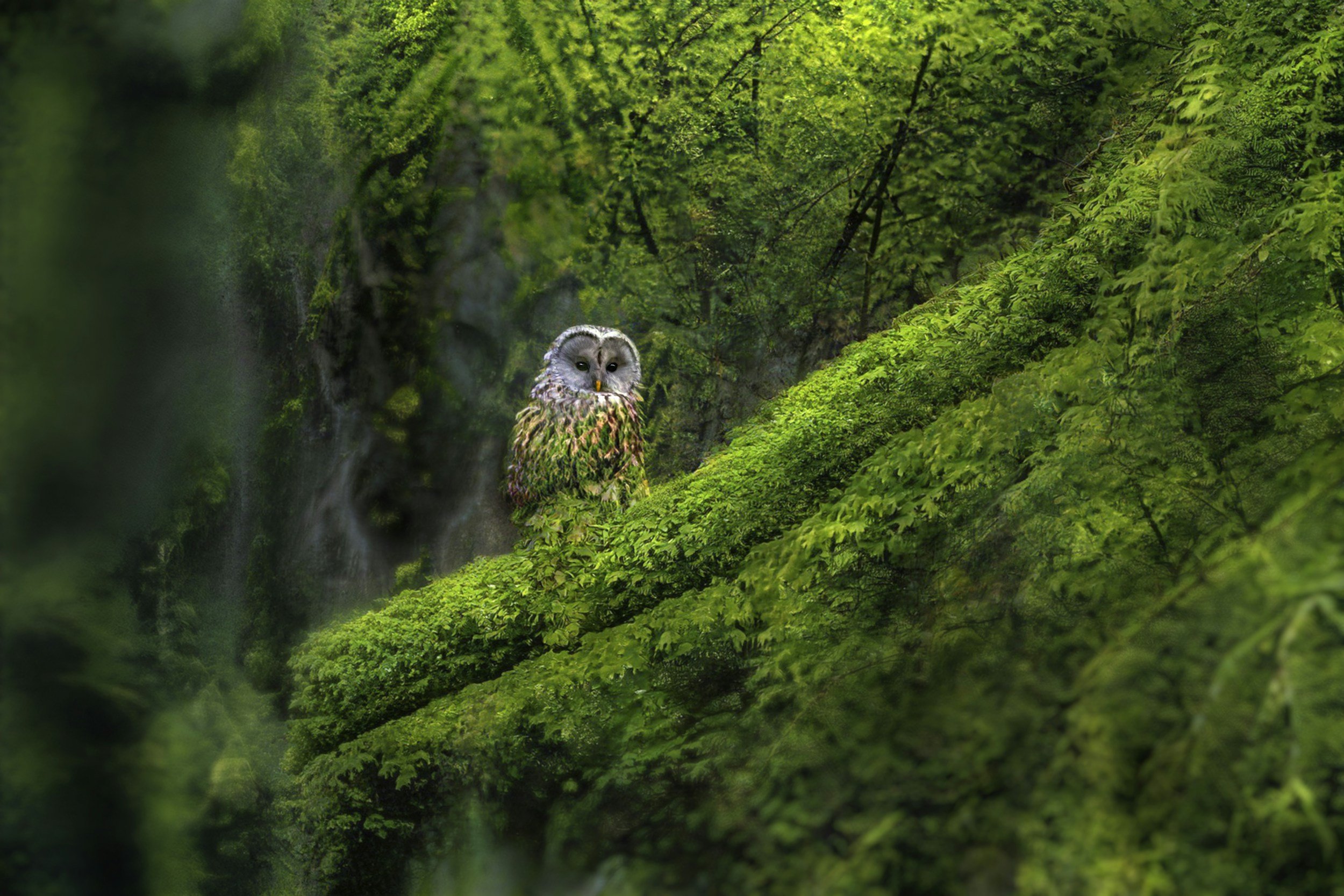
The Barred Owl Problem: Why the Spotted Owl Is Still Declining
Here is where the spotted owl story turns in a direction that almost no one predicted, and that reveals something important about the limits of even well-intentioned conservation intervention.
The logging restrictions were enacted. The old-growth forest protections were put in place. The spotted owl's habitat, on federal lands at least, was meaningfully preserved. And the spotted owl kept declining anyway.
Despite more than 30 years of federal protection under the ESA, northern spotted owl populations have continued to fall — with the steepest declines recorded in the past decade. The reason is not logging. It is another owl.
The barred owl is native to eastern North America. Over the course of the twentieth century, it expanded westward — aided by tree planting and landscape modification across the Midwest, which created forested corridors where none had existed before. Barred owls are highly adaptable generalists. A territory that supports one pair of spotted owls can sustain four pairs of barred owls. They are larger, more aggressive, and less ecologically picky. They outcompete spotted owls for habitat, disrupt nesting, compete for food, and in some cases interbreed, further complicating the genetic picture.
A recent meta-analysis of northern spotted owl population trends found that barred owl presence on spotted owl territories was the primary factor negatively affecting survival, recruitment, and population trend. While habitat components reduced the effect of barred owls on these rates of decline, they did not reverse the negative trend.
The conservation problem that a generation of activists, biologists, lawyers, and loggers had fought over — at enormous human and financial cost — had been partially solved and then overtaken by a problem that nobody had planned for. Ecosystems don't hold still while we work on them.
The Barred Owl Management Strategy: What It Is and Why It's Controversial
Finalized in August 2024, the U.S. Fish and Wildlife Service's Barred Owl Management Strategy proposes to protect spotted owls by lethally removing barred owls across Washington, Oregon, and California. The method: barred owls are attracted with recorded calls and shot when they respond. The scale: up to 450,000 barred owls removed over 30 years, with no more than 16,000 owls culled per year. (As of 2026, the program is facing funding challenges.)
The USFWS has been direct about the rationale: if barred owls are left unmanaged, the northern spotted owl will likely face extinction across all or most of its range. The California spotted owl faces a similar risk as barred owl populations continue expanding southward. Killing barred owls is currently the only feasible, experimentally validated approach for effectively reducing the threat to spotted owls.
The response has fractured the conservation community in ways the timber wars never managed. In March 2024, a coalition of over 40 animal rights organizations wrote to the Secretary of the Interior urging the plan be halted. A coalition of environmental nonprofits intervened in court to defend the agency's strategy against those same lawsuits. Groups that had historically been allied — bird advocates, animal welfare organizations, conservation biologists — found themselves on opposite sides of a courtroom.
The research tells a genuinely complicated story. A regional-scale study published in Conservation Letters in 2025, representing a tribal-public-private research collaboration, found that spotted owl populations stabilized in areas where barred owls were lethally removed — declining at 0.2% per year on average compared to 12.1% without removals. That is a meaningful difference. But once removal stops, decline resumes, suggesting the intervention would need to continue not for 30 years but indefinitely.
Meanwhile, Eric Forsman — the wildlife biologist who spent fifty years studying the spotted owl, whose research arguably launched the entire timber wars controversy — has publicly questioned the plan. "It doesn't give me any satisfaction at all to say this, but trying to control barred owls is largely a waste of time. That genie is out of the bottle."
The Ethics of Killing One Owl to Save Another
This is where the human dimensions of wildlife research becomes acutely useful for understanding why the barred owl management strategy generates such intense opposition, even among people who fully support spotted owl conservation.
Research consistently finds that mutualism-oriented individuals — who see animals as individuals with interests and relationships — are significantly less accepting of lethal wildlife management than domination-oriented individuals, regardless of the ecological justification offered (Whittaker et al., 2006; Manfredo et al., 2021). Shooting 450,000 barred owls over three decades is an action that sits at the extreme end of what mutualist values can accommodate, even in service of conservation.
Wildlife ethicist Bill Lynn framed the moral challenge with unusual candor: "We have a virtually unlimited amount of harm being delivered to barred owls, with very little result. Where is the endpoint? Is it unlimited killing?"
The 2025 regional study suggests the answer is: yes, indefinitely, if the goal is spotted owl persistence. That is not a comfortable answer. But it is an honest one. And the conservation community, which has been shifting mutualist for decades, is finding that it cannot speak with one voice about lethal management at this scale.
A Fish and Wildlife Service official acknowledged the weight of this: "None of us became wildlife biologists expecting lethal removals to be part of the work. But if we don't act now, the spotted owl will be lost."
The Compounding Cost of Delayed Reckoning in Conservation
The spotted owl story, across its full arc, asks something that doesn't have a clean answer: when we have broken an ecosystem badly enough that it can no longer recover without human intervention, do we have an obligation to intervene — even when intervention means killing — and if so, for how long, at what cost, and to whom?
The loggers who lost their livelihoods weren't wrong that the restrictions cost them something tangible. The biologists who fought for the old-growth forest weren't wrong that what was being destroyed was irreplaceable. The conservationists who support barred owl removal aren't wrong that the spotted owl faces imminent extinction without intervention. The critics who call the plan an ethically troubling exercise with no clear endpoint are right.
What the spotted owl story makes visible is the compounding cost of delayed reckoning. The old-growth forests were logged at a pace that everyone with a biology background understood was unsustainable — and the political will to slow it wasn't found until the ecosystem was already critically damaged. The barred owl expansion was documented for decades before it became a crisis — and the management response came late, at enormous scale, with uncertain prospects for long-term success.
Conservation, practiced honestly, is often the management of consequences that accumulated before anyone was paying attention. It is expensive, morally complex, and rarely offers the clean victories that bumper stickers require.
The owl on the bumper sticker — the one being traded against the logger — was never really the point. The point was always the forest. And the forest, like most things worth fighting for, turned out to be considerably more complicated than any single symbol could hold.
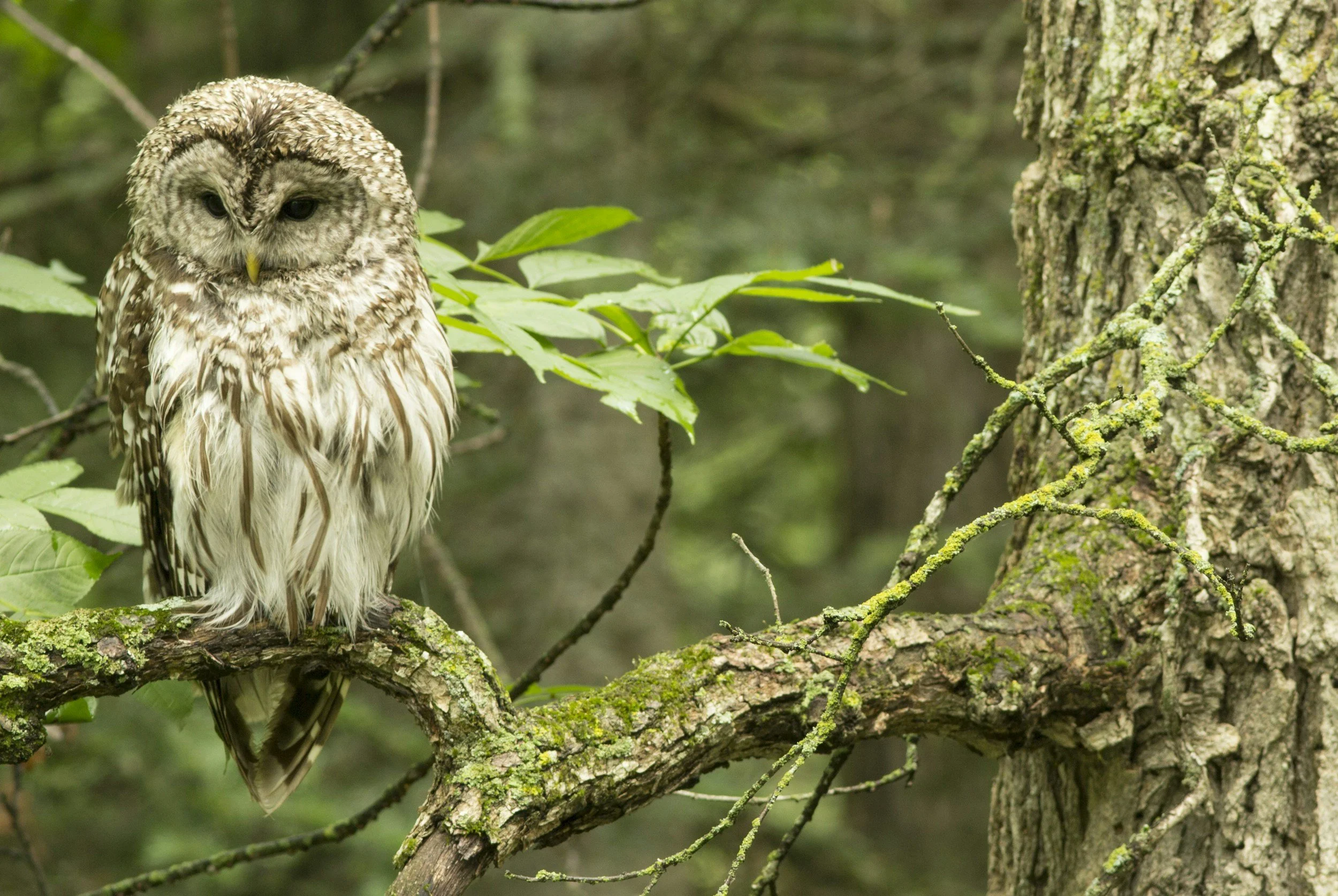
barred owl
Frequently Asked Questions About Spotted Owls and the Barred Owl Management Strategy
Why is the northern spotted owl endangered? The northern spotted owl was listed as threatened under the Endangered Species Act in 1990 due to the destruction of its old-growth forest habitat through commercial logging. Despite significant habitat protections implemented through the 1994 Northwest Forest Plan, spotted owl populations have continued to decline — primarily due to competition and displacement from the invasive barred owl, which now represents the primary threat to spotted owl survival.
What is the Barred Owl Management Strategy? Finalized by the U.S. Fish and Wildlife Service in August 2024, the Barred Owl Management Strategy authorizes the lethal removal of up to 450,000 barred owls across Washington, Oregon, and California over 30 years. The strategy aims to reduce barred owl competition in spotted owl territories to allow spotted owl populations to stabilize and recover. Implementation began in spring 2025.
Why are barred owls a problem for spotted owls? Barred owls are larger, more aggressive, and more ecologically flexible than spotted owls. They outcompete spotted owls for habitat and food, displace them from nesting territories, and in some cases interbreed with them. A territory that supports one pair of spotted owls can sustain four pairs of barred owls. Barred owl presence is now the primary documented driver of spotted owl population decline, surpassing habitat loss as the immediate threat.
Is it ethical to kill barred owls to save spotted owls? This is the central ethical debate the plan has generated. Proponents argue that humans are responsible for the barred owl's westward expansion through habitat modification, and therefore have an obligation to manage the consequences. Opponents argue that barred owls are sentient animals that do not deserve to be killed for ecological position, that the scale is too large to be ethically justified, and that the long-term effectiveness of the removal program is uncertain. Both positions reflect genuinely held values about wildlife and human responsibility. Research in human dimensions of wildlife shows that value orientations — particularly the mutualism-domination spectrum — are stronger predictors of people's positions on this question than ecological knowledge.
Will the barred owl cull actually save the spotted owl? The research is cautiously supportive but not conclusive. A 2025 regional study found that spotted owl populations in removal areas declined at 0.2% per year compared to 12.1% in non-removal areas — a significant difference. However, once removal efforts stop, decline resumes. This suggests the management would need to continue indefinitely rather than for a defined period, which raises legitimate questions about feasibility, cost, and ethical sustainability. Some prominent spotted owl researchers, including Eric Forsman who has studied the species for fifty years, have publicly questioned whether barred owl control can ultimately succeed given how established the population has become.
What caused the spotted owl versus logging controversy? The timber wars of the 1980s-90s arose when the northern spotted owl's ESA listing required significant reductions in old-growth logging on federal lands, causing severe economic disruption to Pacific Northwest timber communities. The conflict was shaped by fundamentally different value orientations toward land and wildlife — with conservation interests prioritizing the intrinsic ecological value of old-growth forests and timber communities prioritizing productive land use and economic livelihoods. The resulting cultural conflict created lasting mistrust between conservation institutions and rural resource-dependent communities that has significantly complicated subsequent conservation efforts in the region.
References Cited
Teel, T.L., & Manfredo, M.J. (2009). Understanding the diversity of public interests in wildlife management. Human Dimensions of Wildlife, 14(6).
Manfredo, M.J., Teel, T.L., & Bruskotter, J.T. (2021). Bringing social values to wildlife conservation decisions. Frontiers in Ecology and the Environment, 19(6).
Smith, J.A., et al. (2024). A practical framework for ethics assessment in wildlife management decision-making. Journal of Wildlife Management.
Castillo-Huitrón, N.M., et al. (2020). The importance of human emotions for wildlife conservation. Frontiers in Psychology, 11.
Whittaker, D., Vaske, J.J., & Manfredo, M.J. (2006). Specificity and the cognitive hierarchy: Value orientations and the acceptability of urban wildlife management actions. Society and Natural Resources, 19(6).
Clark-Wolf, T.J., et al. (2025). Taking action to avoid extinction: Successful regional-scale lethal control of barred owls supports a federal strategy to save spotted owls. Conservation Letters.
U.S. Fish and Wildlife Service. (2024). Barred Owl Management Strategy: Record of Decision.
Somewhat Wild Life | Ethics & Field Notes is published biweekly.Conservation content that doesn't pretend.Written by Julianne — wildlife biologist, former zoo and aquarium staff, researcher, and person still working it out.
