The Tallest Animal in the Room: What Zoos Don't Say About Giraffe Conservation
On captive giraffes, zoo welfare, the 2025 genetics study, and the gap between what we feel and what we're willing to look at
There is a moment, if you've spent time around zoo giraffes, that stays with you.
It's not the feeding platform, where children shriek and hold out lettuce and the giraffe extends that extraordinary tongue and everyone takes a photo. It's what happens when the crowd thins. When the giraffe walks the perimeter of the enclosure — the same path, the same turn, the same rhythm — again. And again. Not because it's going somewhere. Because the body needs to move and there is nowhere to go.
You notice it if you're looking. Most people aren't looking.
I worked in zoos and aquariums. I have watched this. And I want to be clear about something upfront: the people I worked alongside cared deeply about the animals in their care, often to a degree that was professionally and personally costly. This essay is not an attack on those people. It is a question about the institution — and about what we tell ourselves, and what we tell the public, about what keeping a giraffe in a zoo actually means for giraffe conservation.
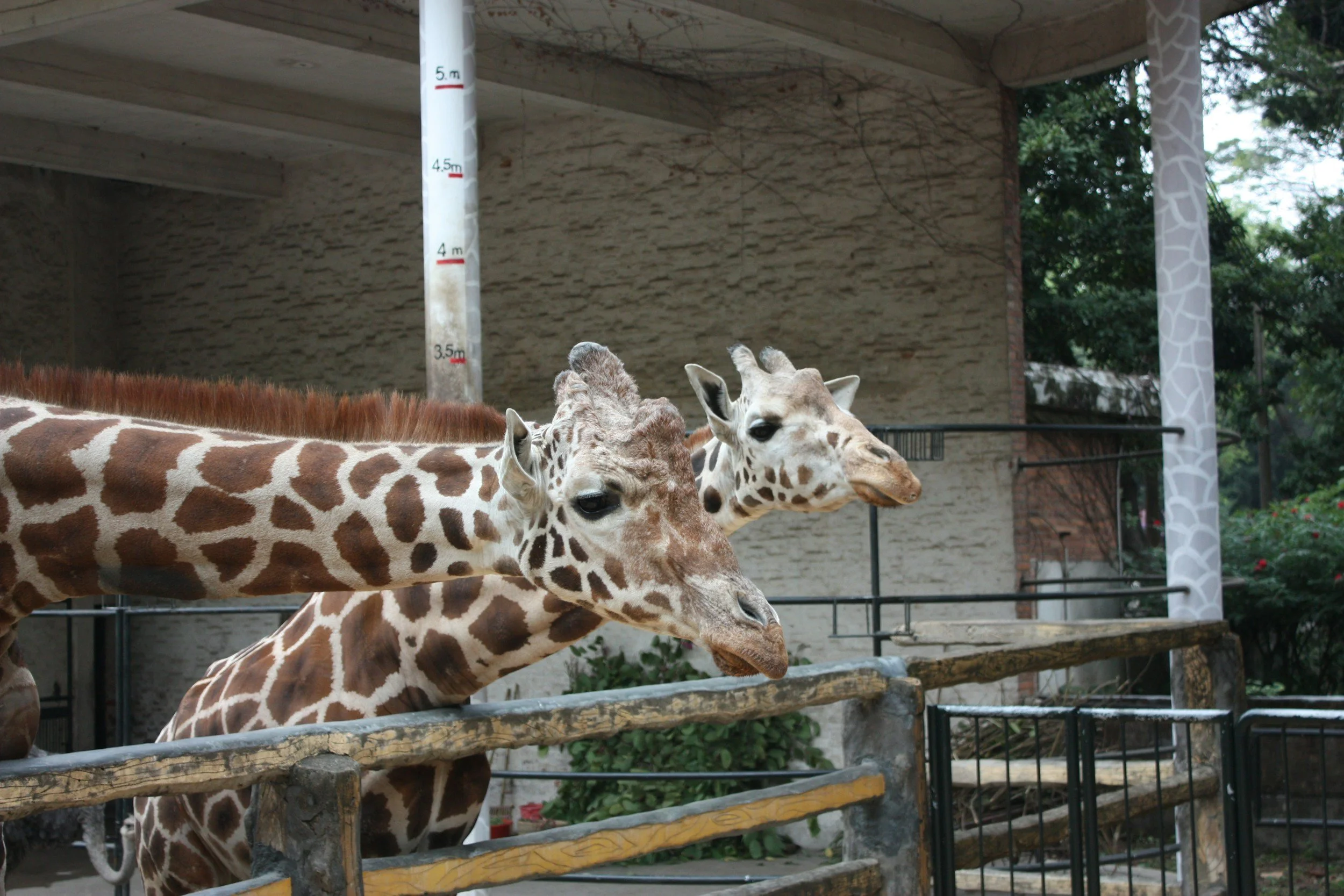
The Empathy Architecture of Zoo Giraffe Experiences
Let's start with something that sounds like a compliment but is actually more complicated.
Research on human-wildlife empathy has consistently found that close physical proximity to animals increases emotional connection, and that emotional connection correlates with conservation-motivated behavior (Castillo-Huitrón et al., 2020, Frontiers in Psychology). A study published in Ambio in 2024 found that the ability to individuate — to identify specific animals as individuals rather than as species representatives — further amplifies empathy and willingness to take conservation action. This is why Tahlequah, the orca who carried her dead calf for 17 days in 2018, generated more conservation response than years of population data had managed. She had a name. She had a face. We knew her.
Zoos understand this mechanism intuitively, even if they don't always frame it in those terms. The giraffe feeding experience is not primarily an educational intervention. It is an empathy delivery system. It works. The child who feeds a giraffe today is more likely to care about giraffes tomorrow — and potentially more likely to donate to conservation organizations, support protective legislation, and raise their own children with a sense of connection to wildlife.
I am not dismissing that. Emotional connection to wildlife is the foundation that conservation motivation is built on, and it is very important.
But here is the question that the empathy research doesn't fully resolve: empathy for whom? The giraffe the child feeds has been trained, managed, and conditioned to perform that interaction. It has been selected, over years of captive breeding, for temperament traits that make it suitable for the role. The empathy generated is real. The animal generating it is living a life that, by most behavioral measures, is significantly compromised. And the visitor goes home feeling good about wildlife conservation having learned almost nothing about the actual state of giraffes in the wild — where populations have declined by approximately 40% over the past three decades, a collapse so quiet that researchers have called it a "silent extinction."
There is a version of zoo empathy-building that genuinely serves giraffe conservation. The current model raises serious questions about whether it qualifies.
Giraffe Welfare in Zoos: The Space Problem, Quantified
Giraffes in the wild are wide-ranging animals. They spend roughly a third of their day walking, moving through open savanna in search of the acacia and other browse that sustains them. One analysis estimated that the minimum biologically meaningful home range for a giraffe, based on body mass, is around 19,200 acres.
The average giraffe enclosure in a North American zoo is approximately 1.2 acres.
That gap — between 19,200 acres and 1.2 acres — is not a welfare footnote. It is the defining condition of a captive giraffe's life. And the body registers it. A survey of giraffes across AZA-accredited institutions found that nearly 80% of the 214 animals observed showed stereotypic behavior — repetitive, compulsive actions like object licking, pacing, and head tossing that are recognized markers of chronic stress and frustrated natural drives. These are not individual quirks. They are a population-wide signal about what it costs a giraffe to live in the space we've given it.
In northern climates, the giraffe welfare problem compounds further. Because giraffes cannot thermoregulate below about 50 degrees Fahrenheit, they spend much of winter confined to heated indoor barns — spaces considerably smaller than their already-undersized outdoor enclosures. Research at Brookfield Zoo in Chicago documented measurable behavioral and hormonal differences between summer outdoor housing and winter indoor housing, consistent with elevated stress in the more confined condition.
Beyond space, captive giraffes commonly suffer from lameness, physical trauma, and nutritional diseases. Most captive giraffes experience reduced lifespans compared to their wild counterparts when adjusting for predation risk. The zoo industry is aware of all of this. There is genuine, serious welfare science being conducted across multiple institutions. The people doing this work care about the animals. The problem is that a giraffe is simply not a species that fits well into the physical constraints of a zoo, and no amount of enrichment or research fully bridges a gap of 19,199 acres.
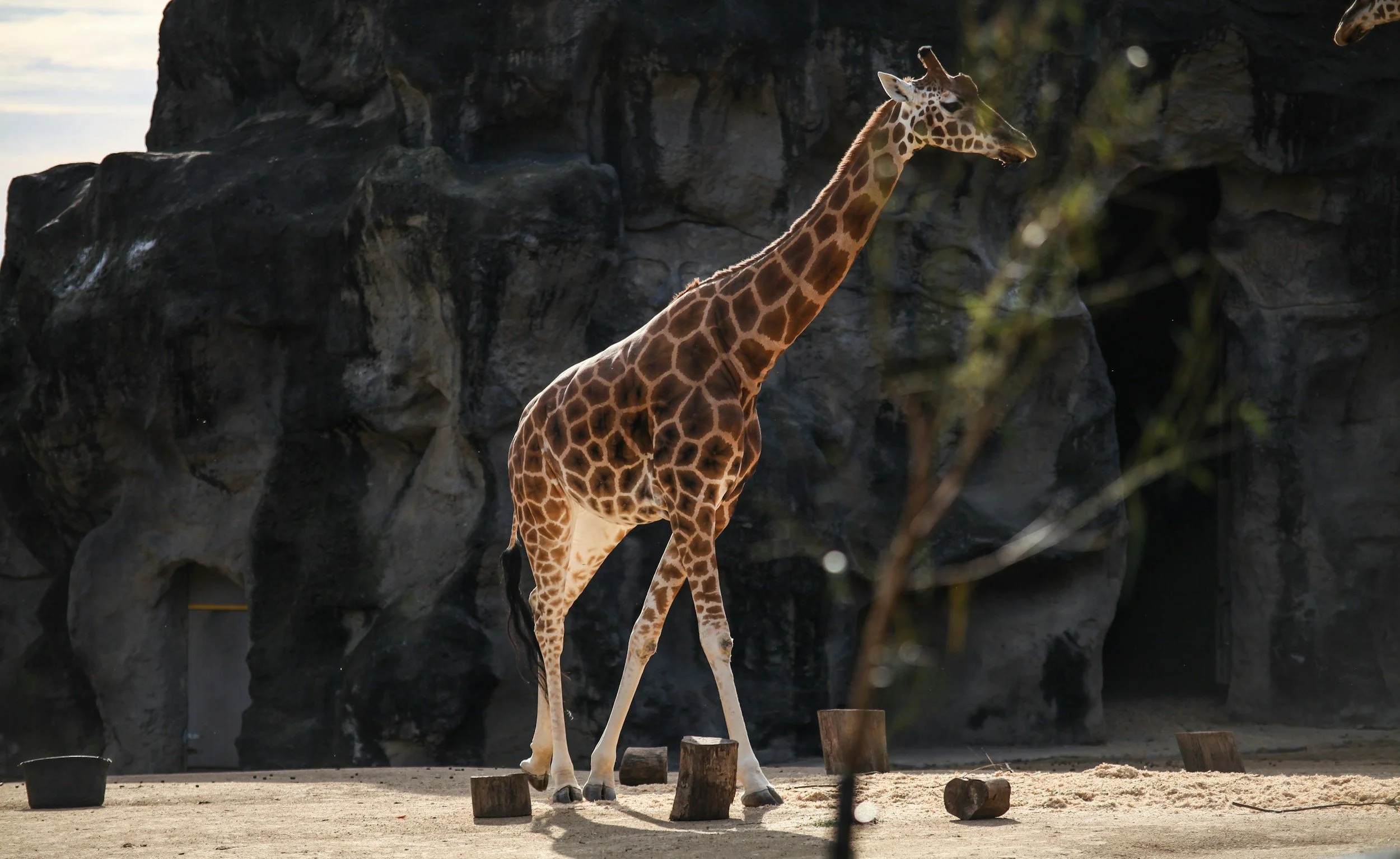
The Mutualism Problem in Zoo Conservation Communication
Here's where the human dimensions piece gets interesting for anyone trying to understand why zoo visitors increasingly feel uneasy without quite being able to name why.
Research by Manfredo, Teel, and colleagues has documented a significant national shift toward mutualism wildlife value orientations — the view of animals as sentient beings deserving of moral consideration, capable of relationship, essentially family (Manfredo et al., 2020, Conservation Biology). This shift is most pronounced in urbanized and suburban populations — which is to say, the people most likely to visit zoos.
As the public has become more mutualistic in its wildlife values, it has also become more likely to notice and be troubled by the behavioral signals of captive stress — the pacing, the stereotypies, the repetitive movements of an animal whose body is trying to do something it cannot do. Zoos are navigating an audience whose values have shifted toward seeing the captive giraffe as an individual with interests, not merely a representative of a species to be conserved in aggregate.
The institution has not fully caught up. Most zoo communication still defaults to the conservation-and-education frame — these animals are ambassadors, they inspire conservation action, they're here for a purpose. That frame was built for a more domination-oriented public that found the utilitarian justification sufficient. It works less well on a mutualist audience that is quietly asking whether the individual giraffe in front of them is okay.
Zoos that have started to answer that question honestly — that acknowledge the welfare tradeoffs, explain what they're doing about them, and treat their public as adults capable of holding complexity — tend to generate more trust, not less. Transparency is not a vulnerability. It is, increasingly, the only communication strategy that works with an audience whose values demand it.
The 2025 Giraffe Genetics Study: What It Found and Why It Matters
The standard defense of keeping large, wide-ranging animals in zoos rests on the concept of assurance populations — genetically representative reserves held in captivity as insurance against wild population collapse. It's a meaningful conservation tool for some species. The concept works, when the genetics are managed correctly.
For captive giraffes in North America, the story has gotten considerably more complicated.
In August 2025, the IUCN formally recognized giraffes as four distinct species: northern, reticulated, Masai, and southern. This taxonomic shift has significant implications for zoo conservation programs — because an assurance population is only as useful as its genetic relationship to the wild animals it's meant to back up.
In November 2025, researchers from the University of Illinois and Morfeld Research & Conservation published a genomic study in the Journal of Heredity comparing DNA from 52 captive giraffes in North American facilities against 63 wild individuals across all four species. The findings were striking: only eight captive giraffes came close to representing a single species — reaching approximately 90% genetic match. The rest were hybrids — genetic blends of two or sometimes three distinct species.
The cause traces back decades, including a 2004 AZA decision to consolidate all giraffe breeding into a single "generic" program before the current genetic distinctions were fully understood. Breeding decisions were made on the basis of temperament and physical compatibility rather than genetics. A nice female, a nice male. Put them together. Repeat for twenty years.
Senior study author Alfred Roca was direct: captive breeding programs in zoos would be better served by starting fresh with genetically pure animals from wild African populations rather than continuing to breed from the existing hybridized stock. The current hybridized giraffes still have value — as educational ambassadors, potentially as surrogates for embryos derived from wild genetics — but as a conservation safety net for wild giraffe populations, the net has significant holes.
This is not a scandal requiring villains. It is an honest reckoning with decisions made under incomplete information. What matters now is what the institution does with that information — and whether it shares it with the public that funds it.
The Marius Question: Zoo Euthanasia, Surplus Animals, and Public Trust
In 2014, a healthy two-year-old giraffe named Marius was euthanized at the Copenhagen Zoo. He was genetically redundant to the European breeding program. Twenty-seven thousand people signed a petition to save him. The zoo proceeded anyway, conducted the necropsy publicly, and fed the carcass to the lions.
The international outrage was significant. From a population management standpoint, the decision was defensible — Marius's genetics were already well-represented, his continued housing served no conservation purpose, and the zoo's resources were finite. But the public had not been prepared for the possibility that a healthy, named, beloved animal could be killed for demographic reasons. The zoo giraffe experience had built enormous emotional investment without building the framework to hold the full reality of what captive population management requires.
What followed was arguably worse for giraffe welfare in zoos than the euthanasia itself. Facilities across Europe and North America sharply curtailed giraffe breeding to avoid the public relations consequences of future surplus animals. The result is a captive population skewing older, with fewer young animals and an increasing number of aging individuals requiring intensive veterinary management for conditions like arthritis and hoof pathology — conditions directly linked to the constraints of captive life.
Researchers writing in PNAS have argued that this overcorrection — prioritizing individual longevity over population health to avoid public discomfort with death — worsens welfare outcomes across the population while closing off the educational opportunity that honest engagement with animal mortality could have provided.
This is what happens when an institution optimizes for public comfort rather than animal welfare or conservation honesty. It produces worse outcomes, more quietly, for the animals it was designed to protect.
Are Zoos Actually Helping Giraffe Conservation?
The European breeding program itself confirmed the answer in 2006, stating plainly that "no zoo board will accept an empty giraffe enclosure" — and that the short-term goal is to keep existing facilities filled with giraffes. This is not a conservation statement. It is an operational one.
What is clear from the available data is that captive giraffes in North America are not held primarily for conservation purposes — they are held for display. The conservation justification, always more aspirational than rigorous for this species, has been significantly undermined by the 2025 genetics study. What remains is the welfare question, and the welfare picture for captive giraffes is not uncomplicated.
Some zoos are doing meaningful direct giraffe conservation work in Africa — habitat protection, anti-poaching support, community programs, and field research partnerships with the Giraffe Conservation Foundation. That work has genuine value and deserves acknowledgment. The person who fed a giraffe at age eight and donated to African giraffe conservation at age forty is a real phenomenon, and the empathy pathway matters.
But the gap between the zoo's public narrative — these animals are ambassadors for conservation, they're here for a purpose, they're thriving under expert care — and the more complicated reality has grown wide enough to matter. An audience shifting toward mutualist values is more likely than ever to sense that gap, to notice the pacing, to ask the questions, to feel that something is being left unsaid.
The 2025 genetics study opened a door. It created an opportunity for honest public conversation about what captive giraffe populations are for, what they cost the individual animals, and what a more defensible future for the species in human care might look like. That conversation is harder than a feeding platform.
It is also more worthwhile — for the institutions, for the public, and for the giraffe still walking the perimeter of the enclosure long after the crowd has gone home.
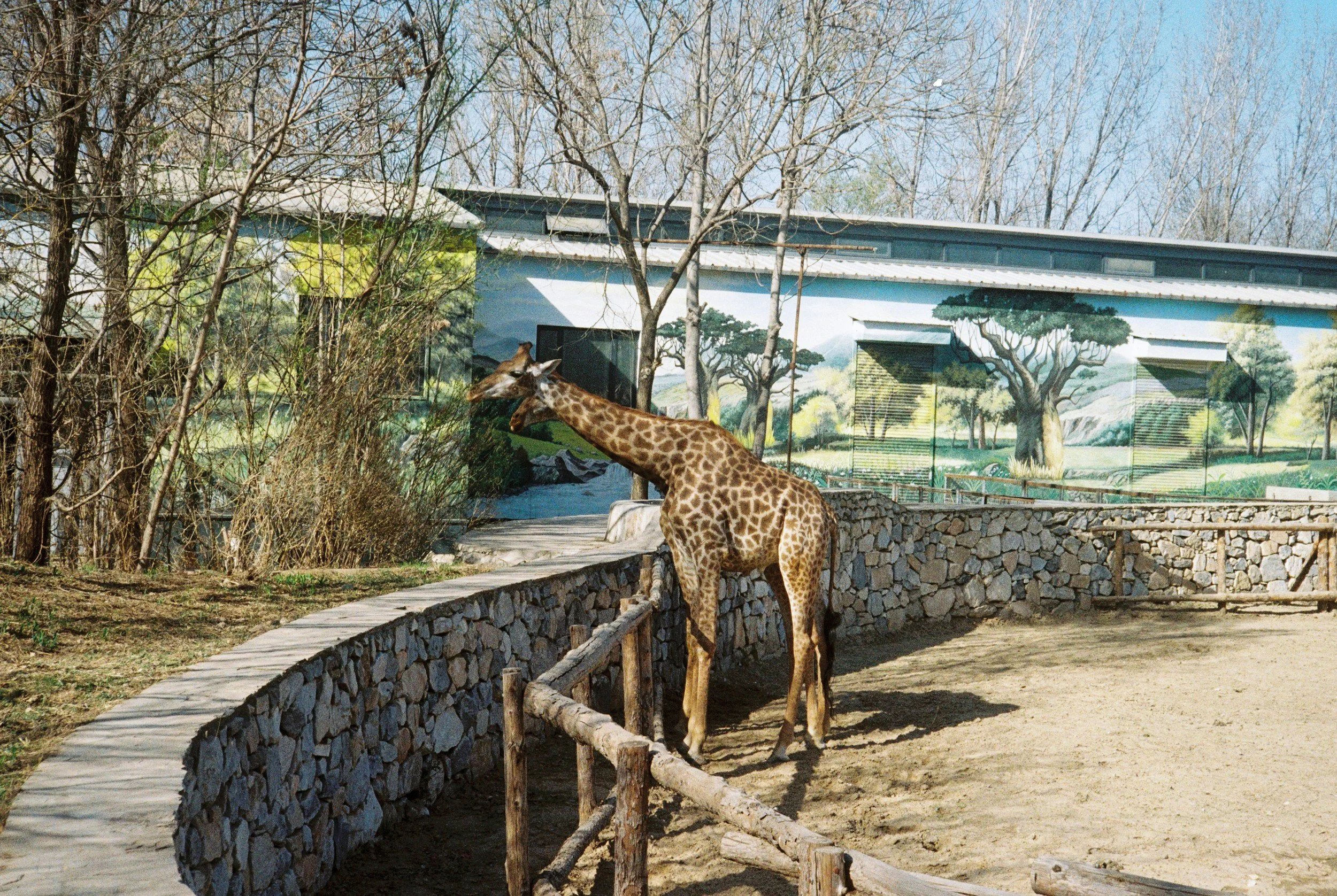
Frequently Asked Questions About Giraffes in Zoos
Are giraffes endangered? Giraffes are listed as Vulnerable on the IUCN Red List, with populations declining approximately 40% since 1990. As of 2025, approximately 117,000 wild giraffes remain across 21 African countries, though two northern subspecies are critically endangered. The IUCN now recognizes four distinct giraffe species, which has significant implications for how captive populations are assessed for conservation value.
Do zoos actually help giraffe conservation? The honest answer is: it depends on the zoo and how you define conservation. Some zoos fund meaningful field conservation programs in Africa through partnerships with organizations like the Giraffe Conservation Foundation. However, the primary function of captive giraffes in most facilities is display — a fact confirmed by the European breeding program itself in 2006. The 2025 genetics study found that most captive giraffes in North America are hybrids of multiple species, which significantly undermines the assurance population justification.
Why is the giraffe feeding experience at zoos controversial? It isn't widely considered controversial — which is part of the issue. The feeding platform generates significant revenue and powerful emotional connection between visitors and giraffes. However, the conditioning required to make giraffes reliable participants in public feeding sessions serves the zoo's operational needs. Whether it serves the individual giraffe's welfare is a more complicated question, particularly given that nearly 80% of zoo giraffes show stereotypic behavior indicative of chronic stress.
What did the 2025 giraffe genetics study find? Researchers from the University of Illinois compared DNA from 52 captive North American giraffes to 63 wild individuals across all four recognized giraffe species. They found that only eight captive animals came close to representing a single species genetically. The remaining animals were hybrids of two or three species, largely the result of decades of undifferentiated breeding under a 2004 AZA policy that managed all giraffe breeding as a single "generic" unit. The researchers recommended that captive breeding programs restart with genetically pure animals from wild African populations if genuine conservation is the goal.
What is giraffe stereotypic behavior and what does it indicate? Stereotypic behaviors are repetitive, apparently functionless actions — pacing, object licking, head tossing, weaving — that develop in captive animals as a response to environments that cannot meet their behavioral needs. In giraffes, they are recognized markers of chronic stress and are most commonly associated with enclosure size, restricted movement, and limited social complexity. A 2022 survey found nearly 80% of giraffes across AZA-accredited facilities displaying these behaviors.
What happened to Marius the giraffe? In 2014, a healthy two-year-old reticulated giraffe named Marius was euthanized at the Copenhagen Zoo because his genetics were already well-represented in the European breeding program, making him genetically redundant. The zoo's decision was biologically defensible from a population management standpoint but generated massive public backlash because it exposed the reality that captive population management sometimes requires killing healthy, beloved animals for demographic rather than welfare reasons. The incident contributed to significant changes in European and North American zoo breeding practices.
References Cited
Castillo-Huitrón, N.M., et al. (2020). The importance of human emotions for wildlife conservation. Frontiers in Psychology, 11.
Manfredo, M.J., et al. (2020). The changing sociocultural context of wildlife conservation. Conservation Biology, 34(6).
Morfeld, K.A., & Roca, A.L. (2025). Genomic assessment of captive giraffe populations in North American zoos. Journal of Heredity.
Johansson, M., et al. (2024). Empathy for wildlife: The importance of the individual. Ambio.
Born Free USA. (2022). Confined Giants: The Plight of Giraffe in Zoos.
Somewhat Wild Life | Ethics & Field Notes is published biweekly. Conservation content that doesn't pretend. Written by Julianne — wildlife biologist, former zoo and aquarium staff, researcher, and person still working it out.
