The Night Shift: Urban Deer Culling, Impossible Decisions, & Why the Data Never Seems to Be Enough
A deep look at urban deer management, the psychology of public opposition, & what conservation communication keeps getting wrong
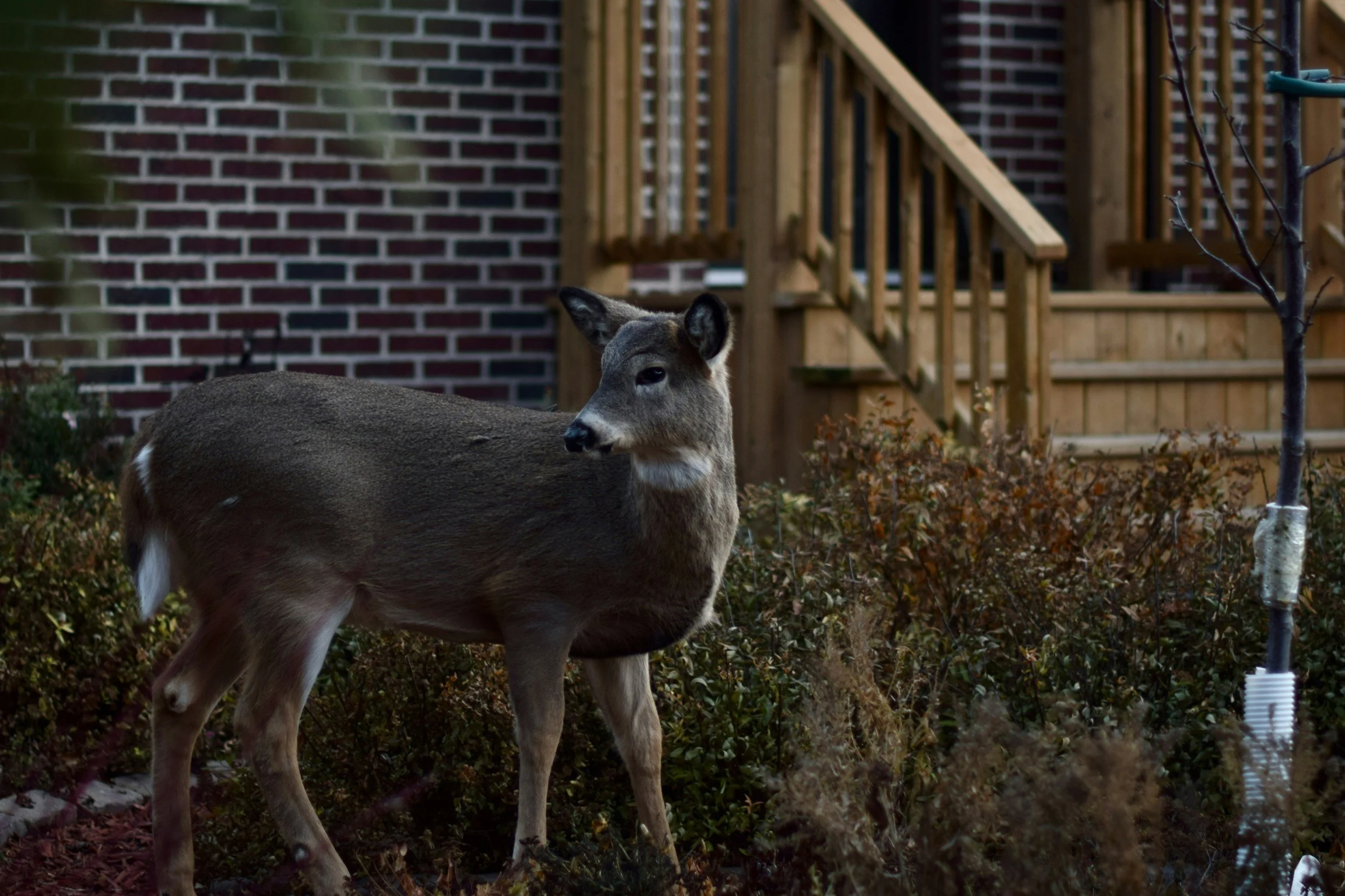
It happens after dark.
In parks you walk your dog through on Sunday mornings. In greenways where your kids learned to identify red-tailed hawks. In the quiet municipal forests that back up against neighborhoods where people have lived for decades and planted gardens and watched deer move through the yard at dusk like something borrowed from a better world.
It happens with highly trained firearms experts. With silenced rifles. With infrared equipment that makes the whole operation feel, to the people who discover it, like something specifically designed not to be seen.
And when they find out — and they always find out — the reaction is not mild.
In Washington DC's Rock Creek Park, a group called Save the Rock Creek Park Deer gathered over 14,000 petition signatures and filed a lawsuit against the National Park Service over its urban deer management program. In Westchester County, New York, community meetings about local deer culling devolved into the kind of conflict usually reserved for school board elections. In parks and greenways across the suburban midwest and northeast, the same pattern repeats like a script nobody wrote but everyone seems to know: biologists document a deer overpopulation problem, managers propose a solution, communities erupt, the cull proceeds anyway, the ecological data shows recovery, and the opposition continues regardless.
I've been on the biology side of this equation. I've done mammal surveys. I understand population dynamics, not as abstraction, but as something you encounter in the field, in the data, in the peculiar silence of a forest where the understory has been eaten to nothing and the birds that nested there are gone.
And I want to tell you something I don't think gets said enough in conservation spaces: The people who show up to those community meetings furious and heartbroken are not wrong to feel what they feel. They're just not getting the whole picture. And that's not entirely their fault. But it might partly be ours.
The Psychology Behind Public Opposition to Deer Culling
Before we get to the deer, let's talk about what's actually happening in that community meeting room, because it turns out researchers have been studying it for decades and the findings are more interesting than "people are emotional and irrational."
The field of human dimensions of wildlife — yes, it's a real academic discipline, with its own peer-reviewed journal and everything — has spent considerable effort understanding why people respond so differently to the same wildlife management information. One of the most durable frameworks to emerge from this work comes from researchers Michael Manfredo and Tara Teel at Colorado State University, who identified two fundamental wildlife value orientations that shape how people think about animals and their management: mutualism and domination.
Mutualists view wildlife as part of an extended social community — animals are sentient beings capable of relationships, deserving of moral consideration, essentially part of the family. Traditionalists, on the other end of the spectrum, hold a domination orientation — wildlife has value primarily in relation to human use and benefit, and managing it for human purposes is entirely appropriate. Most people fall somewhere in between, and many hold both orientations simultaneously depending on context.
Here's the part that makes urban deer culling so reliably explosive: research using national survey data from nearly 47,000 US residents found that the United States is currently in the middle of a significant values shift, with mutualism becoming the dominant orientation — particularly in urbanized and suburban areas (Manfredo et al., 2021, Frontiers in Ecology and the Environment). The same counties most likely to have urban deer overabundance problems are also the counties most likely to be populated by people who view deer as something closer to community members than to managed resources.
This is not a coincidence. It is a collision waiting to happen, every single time.
And here's what makes it worse: studies consistently show that acceptability of lethal wildlife management increases with the perceived severity of the problem — but only when that severity is communicated in terms that connect to the values the audience actually holds (Whittaker, Vaske & Manfredo, 2006, Society and Natural Resources). Tell a mutualist that deer need to be culled because property owners are losing money on landscaping, and you will lose them immediately. Tell the same mutualist that the deer are causing the collapse of the forest understory that songbirds depend on for nesting — that the deer are, in a real sense, causing harm to other wildlife — and you have a fighting chance.
Framing is not spin. It's the difference between communicating honestly in a way people can receive and communicating honestly in a way that guarantees they can't.
What Urban Deer Overpopulation Actually Does to an Ecosystem
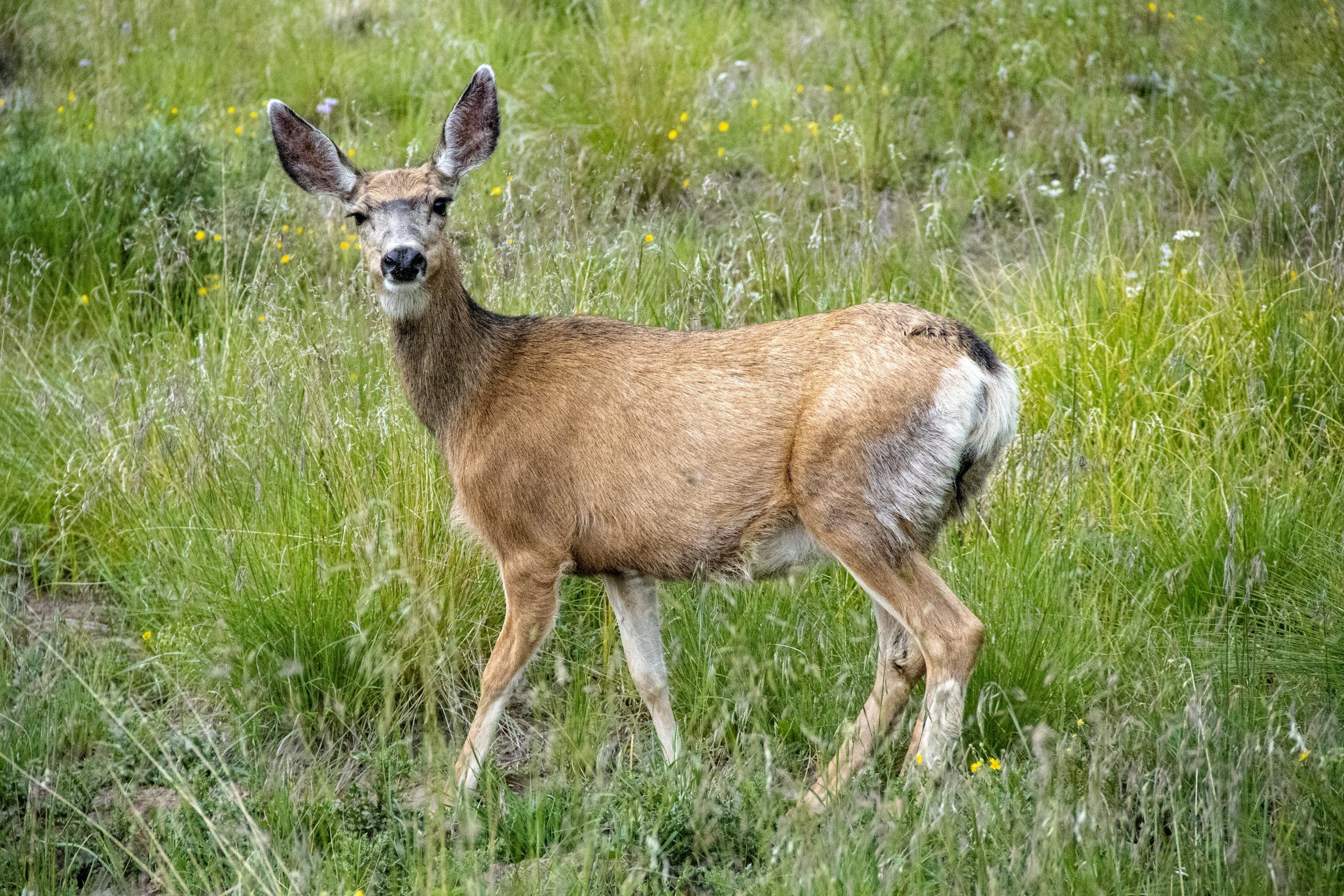
White-tailed deer are one of the great ecological success stories of North American wildlife management — which is, depending on how you look at it, also the problem. Extirpated from much of their range by the early 1900s, they recovered dramatically through the twentieth century as hunting regulations tightened, land use changed, and natural predators like wolves and mountain lions were removed from most of the landscape. They are adaptable, resilient, and remarkably good at living alongside humans.
Too good, in many places.
In Irvington, New York, the deer population reached an estimated 141 deer per square mile against a sustainable density of around 20. At that level of overabundance, deer don't just eat gardens. They restructure ecosystems. They browse tree seedlings before they can establish, collapsing forest regeneration over decades. They eliminate the shrub and ground layer that songbirds depend on for nesting. They become vectors for tick populations that affect human health. The forest looks fine from the trail. The damage is happening in slow motion, in the data, in the absence of things that should be there and aren't.
This is the part that's hard to see if you're not looking for it. The deer are visible. The ecological unraveling they're causing is largely invisible until it isn't, and by then it's very difficult to reverse.
Urban and suburban landscapes make this worse, not better. Fragmented habitat creates what researchers call "deer islands" — patches of green space with no hunting pressure, no predators, and abundant edge habitat that deer thrive in. There are estimated to be as many as 300 of these across the eastern US and Canada. They are, ecologically speaking, pressure cookers.
Why Can't Cities Just Use Deer Contraception Instead?
This is always the first question, and it deserves a direct answer rather than a dismissal — which, to be fair, is not always what it gets.
Deer contraception exists. It has been studied. It works, under specific conditions — primarily in small, enclosed populations where individual animals can be reliably identified, tracked, and retreated on schedule. Fire Island National Seashore in New York is one of the few places deer sterilization has been used with meaningful success, precisely because it is an island with a bounded, manageable population.
Most urban deer situations are not that. Deer move. They move between properties, across roads, in and out of park boundaries. In an open system, you would need to treat a very high percentage of does repeatedly and reliably to achieve meaningful population reduction — and the cost is substantial, the logistics are significant, and the timeline is long. State wildlife agencies, including New York's DEC, have largely declined to permit deer sterilization programs for these reasons.
This is not a conspiracy. It is not indifference to animal welfare. It is a logistical and biological reality that gets lost in the emotional urgency of the conversation.
Deer relocation has the same problem, multiplied. Capturing and relocating deer is expensive, stressful to the animals, and simply moves the population pressure elsewhere. Most receiving habitats are already at or over capacity. It doesn't solve anything. It makes people feel better briefly — and then the deer in the new location become someone else's problem.
Why Emotional Opposition to Deer Culls Is Legitimate — And What to Do With It
Here's where I want to push back a little on the standard conservation communication line, which tends to treat public emotion as an obstacle to be overcome.
A 2024 framework paper published in the Journal of Wildlife Management by Smith et al. made an important point that I think deserves more attention: emotional expression in response to wildlife management decisions does not equate to irrational or uninformed positions. Emotions are not noise in the signal. They are information about what people value, what they stand to lose, and what they need in order to engage constructively rather than defensively.
The research on this goes back further. Castillo-Huitrón et al. (2020), writing in Frontiers in Psychology, found that emotions like sadness about threatened species and happiness at wildlife encounters can generate strongly positive conservation attitudes and motivate genuine action — when those emotions are engaged with rather than dismissed. The problem is not that people feel things about deer. The problem is that those feelings are being handed a management decision with no context, no relationship with the decision-makers, and no language for holding both the love and the hard reality simultaneously.
That is a communication failure. And it is largely ours.
A survey near Cuyahoga Valley National Park found that roughly 71% of nearby residents found lethal deer control acceptable — but that acceptance increased significantly when the ecological rationale was clearly communicated rather than the aesthetic or economic one. The data can move people. It just has to be given the chance.
What Urban Deer Management Gets Wrong About Communication
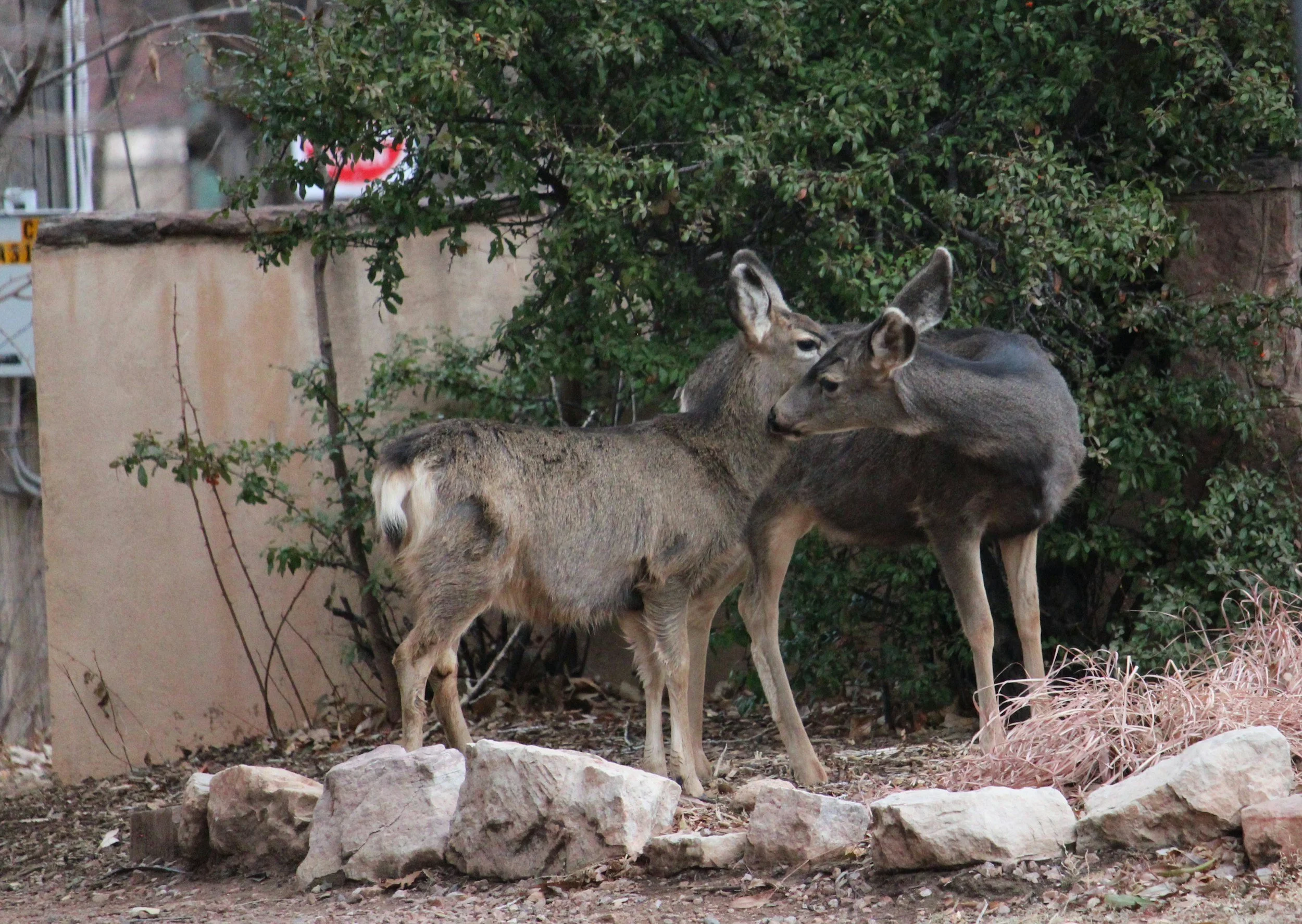
The deer in Rock Creek Park are real animals. The grief people feel about their deaths is real grief. The petition with 14,000 signatures represents 14,000 people who care enough about wildlife to show up, which is not nothing — it is, in fact, exactly the kind of caring that conservation needs more of, even when it's aimed in a complicated direction.
What the research increasingly tells us is that how wildlife management decisions are communicated — when, by whom, to which values, with what framing — matters enormously for whether communities can ultimately accept hard outcomes. A 2020 study on shifting sociocultural context in wildlife conservation (Manfredo et al., Conservation Biology) found that as mutualism values spread across the US, wildlife managers who fail to engage those values in their communication strategies will face escalating conflict regardless of the ecological merits of their decisions.
In other words: the sharpshooters are not the problem. The silence before the sharpshooters is the problem.
Management agencies that engage communities early, explain the full ecological picture honestly, take non-lethal alternatives seriously enough to explain specifically why they don't work in this context, and treat emotional opposition as a legitimate expression of values rather than an inconvenience to be managed — those agencies produce better outcomes. Not perfect outcomes. Not outcomes where everyone is happy. But outcomes where more people, over time, can hold the complexity.
The question isn't whether that caring is valid. It is.
The question is what we do with it. Whether we let it stop at the feeling, or whether we let it take us somewhere harder and more honest and ultimately more useful to the animals we're trying to protect.
Urban deer culling is real. It happens in parks you love, at night, by professionals who also love those animals, because the alternative is a slower and less visible harm that the deer themselves cannot advocate against.
That's not a comfortable place to stand. But it's where the actual work is.
Frequently Asked Questions About Urban Deer Culling
Is deer culling legal in the US? Yes. Municipalities can obtain permits from state wildlife agencies for professional culling programs, typically conducted by USDA Wildlife Services or licensed contractors. Programs operate under strict protocols, including the use of sharpshooters, bait stations, and nighttime operations to minimize public exposure and maximize efficiency.
Why don't cities just relocate deer instead of culling them? Deer relocation is expensive, physiologically stressful to the animals, and simply moves the population pressure to a different location. Most potential receiving habitats are already at or over deer carrying capacity. Relocation does not reduce the overall population — it redistributes it, often creating new conflicts elsewhere.
Does urban deer culling actually work? Yes, when conducted consistently as part of a long-term deer management plan. Population rebound is a genuine concern — deer reproduce quickly and neighboring populations move into vacated territories — which is why culling must be sustained rather than treated as a one-time intervention. When done consistently, urban deer population control programs have demonstrated measurable ecological recovery, including forest understory regeneration and improved songbird nesting success.
What is the ecological impact of deer overpopulation in cities? Overabundant deer in urban areas suppress forest regeneration by browsing tree seedlings before they can establish, eliminate the understory vegetation that songbirds and other wildlife depend on for nesting and cover, and significantly increase local tick populations with direct public health implications. In heavily impacted areas, entire forest age classes can be missing — the trees you see are old growth that established before deer populations exploded, with nothing coming up behind them.
Why is deer contraception not used more widely in cities? Deer contraception — primarily immunocontraception vaccines like PZP — works in small, enclosed, manageable populations where individual animals can be identified and reliably retreated. In open urban systems where deer move freely across property boundaries and between parks, achieving the treatment coverage rates required for meaningful population reduction is logistically and financially prohibitive. Most state wildlife agencies do not permit deer sterilization programs for this reason.
Why is public opposition to deer culling so intense? Research in human dimensions of wildlife identifies a significant national shift toward mutualistic wildlife value orientations — particularly in suburban and urban areas — in which people view wildlife as individuals with emotional lives and social relationships rather than as managed resources. For people holding these values, a deer cull in a beloved local park can feel like a profound betrayal rather than a management decision. This response is not irrational — it reflects genuinely held values about animals and community. The problem is not the emotion. It is the communication failure that leaves people without the ecological context to understand why lethal management is sometimes the most genuinely protective choice available.
References Cited
Manfredo, M.J., Teel, T.L., & Bruskotter, J.T. (2021). Bringing social values to wildlife conservation decisions. Frontiers in Ecology and the Environment, 19(6).
Manfredo, M.J., et al. (2020). The changing sociocultural context of wildlife conservation. Conservation Biology, 34(6).
Smith, J.A., et al. (2024). A practical framework for ethics assessment in wildlife management decision-making. Journal of Wildlife Management.
Whittaker, D., Vaske, J.J., & Manfredo, M.J. (2006). Specificity and the cognitive hierarchy: Value orientations and the acceptability of urban wildlife management actions. Society and Natural Resources, 19(6).
Castillo-Huitrón, N.M., et al. (2020). The importance of human emotions for wildlife conservation. Frontiers in Psychology, 11.
Somewhat Wild Life | Ethics & Field Notes is published biweekly. Conservation content that doesn't pretend. Written by Julianne — wildlife biologist, former zoo and aquarium staff, researcher, and person still working it out.
